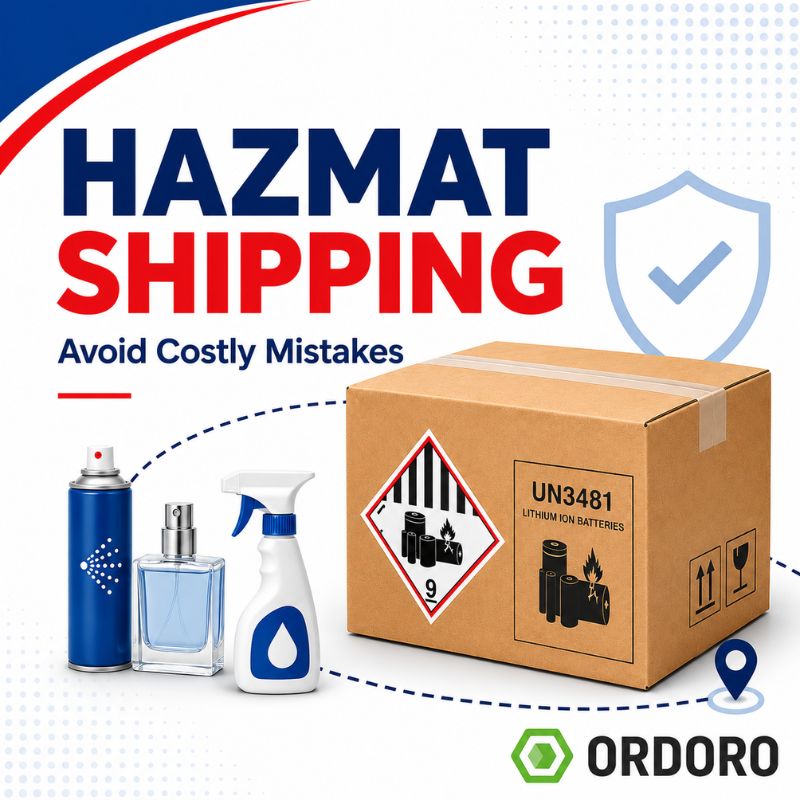
Hazardous materials shipping is not limited to industrial chemicals or products with obvious warning labels. With USPS introducing a $50 Hazmat Noncompliance Fee in July 2026, eCommerce businesses have even more reason to identify everyday items that require special handling, packaging, or shipping services.
Perfume, nail polish, aerosol sprays, cleaning products, hand sanitizer, and electronics containing lithium batteries can all fall under hazardous materials shipping rules. Sending one of these products incorrectly can result in delays, returned packages, added fees, or carrier penalties. The key is knowing what you are shipping before the order reaches the packing station.
What Counts as Hazardous Material?
A hazardous material, often shortened to hazmat, is an item or substance that can create an unreasonable risk to health, safety, or property while being transported. Depending on the product, it may be permitted, restricted to certain services, or prohibited entirely.
The U.S. Department of Transportation organizes hazardous materials into nine classes:
- Explosives
- Gases
- Flammable liquids
- Flammable solids
- Oxidizers and organic peroxides
- Toxic and infectious substances
- Radioactive materials
- Corrosive materials
- Miscellaneous hazardous materials
eCommerce sellers are most likely to encounter gases, flammable liquids, corrosive products, and Class 9 materials such as lithium batteries.
Common eCommerce Products That May Be Hazmat
Some regulated products are easy to identify. Others may look like ordinary household or personal-care items.
Common examples include:
- Lithium batteries and battery-powered electronics
- Perfume, cologne, and body spray
- Nail polish and nail polish remover
- Aerosol sunscreen, hairspray, and cleaning products
- Hand sanitizer
- Paint, adhesives, stains, and solvents
- Bleach and other household cleaners
- Lighters and lighter fluid
- Pool chemicals and some fertilizers
- Dry ice
Not every item within these categories is handled the same way. Requirements can depend on the ingredients, quantity, container, battery type, destination, and whether the package will travel by ground or air.
Check the Product Before You Ship It
Start by confirming whether the item is regulated. Ask the manufacturer or supplier for its Safety Data Sheet, commonly called an SDS. It may include information about hazards and transportation classification. You can then compare that information with USPS Publication 52 or the carrier’s hazardous materials requirements.
You may also need the proper shipping name, hazard class, identification number, or battery specifications. Do not rely only on the product name or assume an item is safe for standard shipping because it arrived at your warehouse in a regular-looking box.
Lithium batteries are a good example. They are regulated as hazardous materials, and the requirements can vary depending on whether the battery is shipped by itself, packed with equipment, or installed inside a device.
Confirm the Carrier and Shipping Service
A carrier may accept a hazardous product through one service but prohibit it through another. Air transportation is often more restrictive than ground shipping, so selecting the fastest available service without checking the rules can create a compliance problem.
For USPS shipments, Publication 52 is the primary resource for determining whether a hazardous product is mailable and how it must be packaged, marked, and shipped.
USPS Ground Advantage is commonly used for hazardous materials that cannot travel by air, although the product must still meet all applicable USPS requirements. Merchants should also review the latest USPS shipping changes for 2026 because USPS pricing, package measurements, and hazardous-material fees can affect the final cost of a shipment.
The July 2026 USPS changes introduced a $50 Hazmat Noncompliance Fee for commercial packages that do not meet USPS hazardous-material requirements. This makes it even more important to identify hazmat correctly when creating the label, rather than waiting for USPS to discover it later.
Package, Mark, and Declare It Correctly
Once you know the product is accepted, follow the carrier’s packaging instructions for that specific material. Requirements may include rigid outer packaging, cushioning, leak protection, orientation arrows, hazard markings, or limits on how much material can be placed in one package.
The shipping label must also include the correct hazmat declaration. A package can be physically packed correctly and still be noncompliant if the hazardous material was not properly identified when the label was created.
International shipping requires additional caution. Many hazardous materials that are allowed in domestic mail are prohibited internationally, with only limited exceptions.
Build Hazmat Checks Into Your Shipping Workflow
Hazmat compliance becomes more difficult when employees have to remember the rules for every order. Product records should clearly identify regulated items so the correct carrier, service, and label options can be selected before the package leaves the warehouse.
Ordoro supports USPS Hazmat shipping through Pitney Bowes, allowing merchants to add the appropriate hazmat declaration while creating a USPS label.
A connected eCommerce shipping and order management system can also help teams manage orders from multiple sales channels in one place, reducing the chance that an employee overlooks special shipping requirements during a busy fulfillment day.
Frequently Asked Questions
What is considered hazardous material for shipping?
Hazardous materials are products that can pose a safety risk during transportation because they are flammable, corrosive, toxic, pressurized, reactive, or otherwise dangerous. Common eCommerce examples include aerosols, perfume, nail polish, cleaning chemicals, and lithium batteries.
Can hazardous materials be shipped through USPS?
Some hazardous materials can be shipped through USPS, but they may be limited to specific services, quantities, packaging, or destinations. Sellers should consult USPS Publication 52 before mailing a regulated product.
Can hazmat be shipped with USPS Ground Advantage?
Yes, USPS Ground Advantage can be used for many hazardous materials that must travel by surface transportation. The product must still be mailable and meet all applicable packaging, marking, and declaration requirements.
What happens if hazmat is not declared?
An undeclared hazardous-material shipment may be delayed, returned, intercepted, or assessed additional fees. It can also create safety risks and lead to carrier penalties or loss of shipping privileges.
Are lithium batteries considered hazardous materials?
Yes. Lithium batteries are regulated hazardous materials. Shipping requirements depend on the battery type, power rating, condition, quantity, and whether it is shipped alone or inside equipment.
Does Ordoro support USPS hazardous materials shipping?
Yes. Merchants using USPS through Pitney Bowes in Ordoro can identify eligible hazardous-material shipments and add the required hazmat declaration during label creation.
A Safer Approach to Hazmat Shipping
Hazardous materials shipping does not have to slow down fulfillment, but it should never be treated like an ordinary shipment.
Identify regulated products early, confirm the rules for the carrier and service, and make sure the package is properly packed, marked, and declared. A few extra checks before shipping are much easier to manage than a returned package, unexpected fee, or compliance issue later.
Need help building a safer shipping workflow? Talk to an Ordoro expert to see how Ordoro can help your team manage orders, shipping, and hazmat declarations more efficiently.