Update: When we originally published this article in 2012, we used a customs dispute involving Marvel action figures to explain how product classification could affect import duties. The story highlights a broader lesson: the supplier price does not reflect the full cost of getting inventory ready to sell.
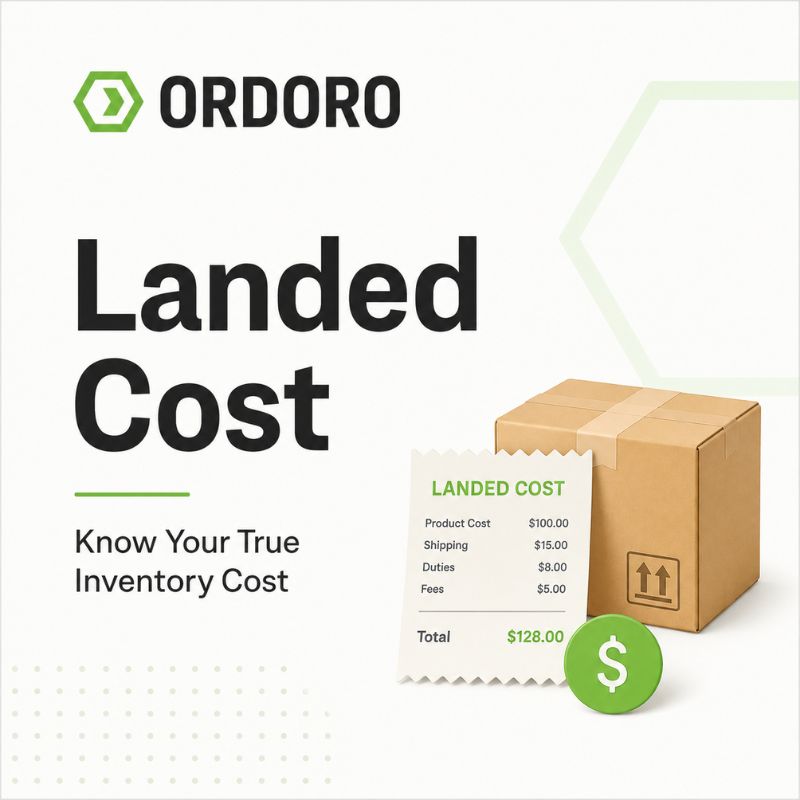
Landed cost adds the purchase price to every expense involved in getting inventory to the place where the business will store, sell, or fulfill it. Freight, duties, insurance, brokerage fees, and receiving costs can significantly change the profitability of a product. Understanding landed cost helps eCommerce businesses make better decisions about suppliers, pricing, purchasing, and inventory.
What Does Landed Cost Include?
Landed cost begins with the price paid to the supplier, but it does not end there. Depending on how and where the inventory is purchased, landed cost may include:
- Product or manufacturing costs
- Supplier shipping and inbound freight
- Customs duties and tariffs
- Freight insurance
- Brokerage and customs-processing fees
- Port and handling charges
- Receiving and preparation costs
Not every business will have all of these expenses. A company purchasing products domestically may not pay customs duties, while an importer could face several charges before the inventory reaches its warehouse. The key is to include the costs required to move the product from the supplier to the location where the business can begin fulfilling customer orders.
Outbound shipping to the customer is usually evaluated separately. Landed cost tells the business what it spent to acquire and receive the inventory. Businesses must also account for packaging, fulfillment labor, payment fees, and customer delivery costs to calculate the full profit from a sale.
Why Supplier Price Does Not Tell the Whole Story
A lower supplier price does not always produce a lower inventory cost. Suppose one supplier charges $12 per unit and another charges $10. The second offer initially appears to save the business $2 on every product.
However, the lower-priced supplier may require international freight, customs duties, insurance, and brokerage fees. It may also have a longer lead time or a larger minimum order quantity. After adding those expenses, the business may spend more to acquire the $10 product than the $12 alternative.
Looking only at supplier price can lead a business to:
- Underprice products
- Overestimate margins
- Choose a more expensive supplier
- Purchase too much inventory
- Misjudge the cash required for replenishment
Landed cost provides a more complete basis for comparing suppliers and evaluating product profitability.
How to Calculate Landed Cost
A basic landed-cost calculation adds the product cost to the expenses required to transport and receive the inventory.
Consider a shipment with the following costs:
- Merchandise: $8,000
- Inbound freight: $1,200
- Duties and tariffs: $500
- Insurance and brokerage: $200
- Receiving charges: $100
The shipment’s total landed cost is $10,000. If the shipment contains 1,000 identical units, the landed cost is $10 per unit. The business can then use that amount, rather than the supplier price alone, when evaluating margins and setting product prices.
The calculation becomes more complicated when a shipment contains several products with different sizes, weights, quantities, and values. The shared freight and import expenses must then be allocated among the products.
How to Allocate Shared Costs Across Products
There is no single allocation method that works for every shipment. The business should choose the allocation method that best matches what drove each shared cost.
Common allocation methods include:
- Quantity: Divide shared costs according to the number of units.
- Weight: Assign more of the cost to heavier products.
- Volume: Allocate costs according to the space each product occupies.
- Product value: Divide costs based on the purchase value of each SKU.
Quantity may work for a shipment containing similar products. Weight or volume may provide a more accurate allocation when a shipment’s physical characteristics determine the freight cost.
Product value can be useful for duties, insurance, or other charges tied to the value of the merchandise.
Some businesses use more than one method. A business might allocate freight by weight and insurance by product value.
Consistency matters. Using the same reasonable approach across similar shipments makes it easier to compare product performance over time.
How Landed Cost Affects Pricing
A product may appear profitable when pricing is based only on its supplier cost. For example, a business might buy an item for $20 and sell it for $40, creating what appears to be a $20 margin. If freight, duties, insurance, and receiving add another $6 per unit, the actual inventory cost is $26.
The business must then subtract payment fees, packaging, fulfillment labor, outbound shipping, returns, and customer-acquisition costs from the remaining $14. That does not automatically mean the selling price should increase. It does mean the business needs accurate cost information before deciding whether the price supports a healthy margin.
Our guide to eCommerce product pricing strategy explains how product costs, shipping, inventory performance, and customer value work together when setting prices.
How Landed Cost Supports Better Purchasing Decisions
Landed cost can also change how a business evaluates purchase orders and suppliers. A supplier with a higher product price may offer lower freight costs, faster delivery, smaller minimums, or more predictable lead times. Those advantages can reduce the amount of inventory the business needs to hold and make replenishment easier.
A lower-priced supplier may still be the better choice, but the decision should be based on the complete acquisition cost rather than one number on the purchase order.
Before placing an order, consider:
- The expected landed cost per unit
- Supplier minimum order quantities
- Freight and import expenses
- Production and transportation lead times
- The cash tied up while inventory is in transit
- The risk of delays, damage, or unexpected fees
Our guide to purchase orders for eCommerce explains how purchase orders help businesses document products, quantities, suppliers, and expected costs before inventory arrives.
Landed Cost and Inventory Management
Accurate landed cost gives inventory data more financial meaning. Inventory quantities show how many units are available. Landed cost shows businesses how much money they have invested in each unit.
That information can support decisions about:
- Which products to reorder
- Which suppliers provide the best overall value
- Whether margins are shrinking
- Which products are tying up working capital
- Whether slow-moving inventory should be discounted
- How much cash is needed for future purchases
It also improves inventory-turnover analysis. Two products may sell at the same rate but require very different amounts of cash to purchase, transport, and replenish.
Our guide to inventory turnover explains how sales and inventory levels can be evaluated together.
For a broader view of how purchasing, receiving, stock tracking, and fulfillment connect, read our guide to eCommerce inventory management.
Review Landed Cost as Conditions Change
Landed cost is not necessarily fixed. Freight rates, duties, supplier prices, insurance costs, and brokerage fees can change. A product that was profitable during one purchasing cycle may perform differently on the next shipment.
Businesses should review landed cost when:
- Supplier prices change
- Freight costs increase
- A new country of origin is introduced
- Customs classifications or duty rates change
- Order quantities change significantly
- A new warehouse or receiving location is used
Historical estimates can help businesses plan a purchase, but they should compare those estimates with the actual expenses after the shipment arrives.
Comparing estimated and actual landed cost can improve future purchasing decisions.
Landed Cost FAQs
What is the difference between landed cost and product cost?
Product cost is the amount paid for the merchandise itself. Landed cost includes the product cost plus the expenses required to transport and receive the inventory.
Does landed cost include shipping to the customer?
Landed cost generally covers the cost of acquiring and receiving inventory. Businesses usually calculate outbound fulfillment and customer delivery separately to determine an order’s total profitability.
Why is landed cost important for eCommerce businesses?
Landed cost gives businesses the information they need to price products accurately, compare suppliers, evaluate margins, plan purchases, and track how much money they have tied up in inventory.
Understand the True Cost of Your Inventory
Supplier price is only one part of what inventory costs. Freight, duties, insurance, receiving, and other charges can all affect product margins and purchasing decisions.
Ordoro helps eCommerce businesses connect purchase orders, goods receipts, suppliers, inventory, and fulfillment through one operational system. Explore Ordoro’s Inventory Management Tools
- Commerce Corner: Big News, Fresh Features & Free Swag
- Haven’t Checked Your Walmart Seller Account Lately? You Might Want To.
- eBay Sellers Got a Glimpse of Higher Ad Costs. Then Came the Explanation.
- Small Brands Could Have a Big Holiday Advantage
- Meta Muse Can Shop Like a Customer. Should Merchants Treat It Like One?