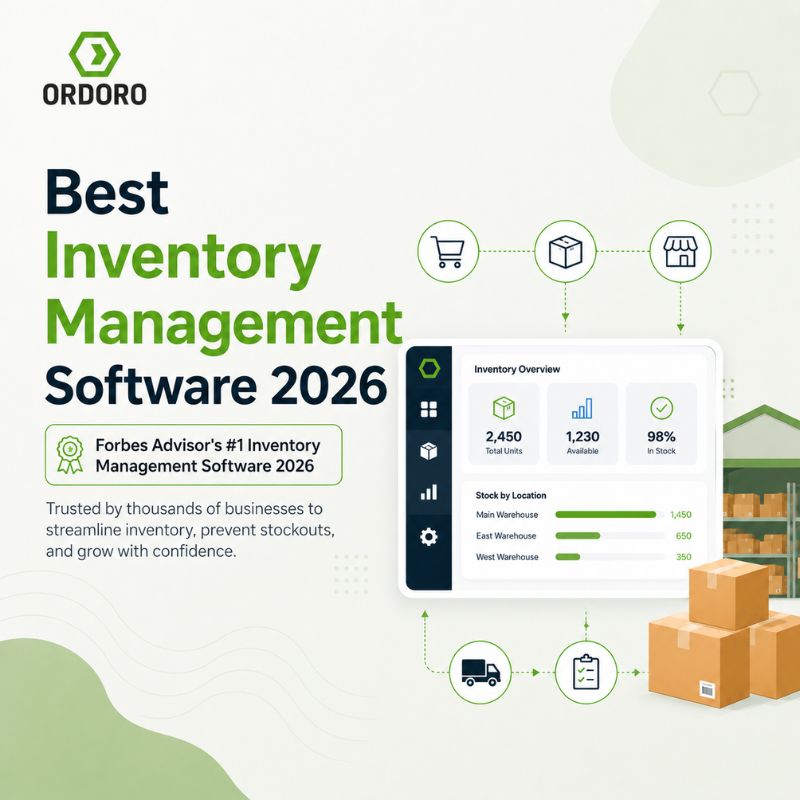
Forbes Advisor ranked Ordoro first in its 2026 comparison of the best inventory management software, giving Ordoro a 4.9 out of 5 rating and naming it Best for Integrations.
We are proud of the recognition, but what matters most is why Forbes Advisor selected Ordoro.
The review highlighted many of the things our team has spent years improving, including integrations with more than 60 eCommerce platforms and business tools, multichannel inventory synchronization, unlimited warehouse tracking, low-stock alerts, supplier lead time tracking, and a flexible API.
Building Better Inventory Management Starts With Listening
We have never planned our product roadmap by asking what we need to build to land on a best software list. We start with more practical questions. What frustrated a customer this week? Where is a business losing time? What part of inventory management is creating more manual work than it should? What information would help a team make a better decision before a stockout or purchasing mistake happens?
Sometimes that means building a new integration or automation. Other times, it means improving a workflow, making a report easier to use, or removing a step that was slowing someone down.
Over time, those improvements add up. They help businesses keep inventory accurate across sales channels, track products across warehouses, manage purchase orders, work with suppliers, and keep orders moving without relying on disconnected spreadsheets and systems.
That is why this recognition means so much to us. Forbes Advisor noticed the same practical details our customers have helped us improve year after year.
Why Forbes Advisor Ranked Ordoro First
Forbes Advisor evaluated 18 inventory management platforms using 39 data points, including multichannel management, inventory optimization, forecasting, features, ease of use, customer service, and overall value.
Ordoro received the highest rating in the comparison.
The review placed a strong emphasis on Ordoro’s integrations. Businesses can connect Ordoro with more than 60 eCommerce platforms, marketplaces, shipping carriers, point-of-sale systems, accounting tools, and other applications. When an existing integration does not cover a specific workflow, Ordoro’s API gives businesses and technology partners the flexibility to build their own connection.
That flexibility is important because no two eCommerce operations work exactly the same way.
One business may sell through Shopify, Amazon, Walmart Marketplace, and a retail location while shipping from multiple warehouses. Another may work with several suppliers, route specific orders to dropshippers, or use a custom system that needs to exchange data with Ordoro.
The goal is not to force every business into the same workflow. It is to give businesses the tools and connections they need to manage inventory in a way that works for their operation.
Keeping Inventory Connected Across Channels and Warehouses
Selling across multiple channels can help a business reach more customers, but it also creates more opportunities for inventory to become inaccurate.
When a product sells on one channel, the available quantity needs to update everywhere else. Without reliable inventory synchronization, a business can oversell a product that is no longer available or miss a sale because one channel is showing the wrong quantity.
Ordoro helps keep inventory synchronized across connected sales channels as orders are received and stock levels change. Businesses can also track inventory across unlimited warehouses, making it easier to see what is available and where it is located.
Forbes Advisor also highlighted Ordoro’s low-stock alerts and supplier lead time tracking. These tools help businesses look beyond the inventory they have today and prepare for what they may need next.
Instead of waiting for a stockout to reveal a problem, teams can review current quantities, open purchase orders, supplier information, and expected arrival dates before placing another order. That visibility can help businesses avoid ordering too late, ordering twice, or buying more inventory than they need.
More Than Inventory Counts
Inventory management is connected to almost every part of an eCommerce operation. It affects what customers can purchase, when orders can ship, what a warehouse needs to pick, what a purchasing team should reorder, and whether suppliers can meet the business’s timeline.
That is why Ordoro brings inventory, orders, purchasing, shipping, and dropshipping workflows together in one platform.
Orders flow in from connected sales channels. Inventory quantities update as those orders are processed. Warehouse teams can organize fulfillment, print shipping documents, and create labels. Purchasing teams can manage suppliers and purchase orders. Businesses that use dropshipping can route eligible orders to the appropriate supplier.
Keeping those workflows connected gives teams a clearer view of what is happening across the business and reduces the need to manually move information from one system to another.
Recognition Shaped by Our Customers
This recognition reflects years of listening to customers, improving the product, and solving the problems eCommerce businesses run into every day.
It reflects thousands of conversations with customers, support requests that uncovered a better way to handle a task, and product decisions shaped by how eCommerce businesses actually work. Our customers have trusted us with an important part of their operations. They have also challenged us, shared feedback, and helped us identify where Ordoro could be better.
We are grateful to Forbes Advisor for the recognition, but we are even more grateful to the customers who helped us earn it. We will keep listening, improving, and looking for ways to make inventory, order management, and shipping easier.
Frequently Asked Questions
Why did Forbes Advisor rank Ordoro first?
Forbes Advisor gave Ordoro a 4.9 out of 5 rating and named it Best for Integrations. The review highlighted Ordoro’s more than 60 integrations, flexible API, multichannel inventory synchronization, unlimited warehouse tracking, low-stock alerts, supplier lead time tracking, and optional shipping and dropshipping capabilities.
What eCommerce platforms and tools integrate with Ordoro?
Ordoro connects with more than 60 eCommerce platforms, marketplaces, shipping carriers, point-of-sale systems, accounting tools, and other business applications. Ordoro also offers an API for businesses and technology partners that need to create a custom connection.
Can Ordoro manage inventory across multiple sales channels and warehouses?
Yes. Ordoro synchronizes inventory across connected sales channels as orders are received and supports inventory tracking across unlimited warehouses. This gives businesses a clearer view of what is available across their operation.
Forbes Advisor’s recognition reinforces why Ordoro stands out as the best inventory management software for eCommerce businesses that need inventory, orders, and shipping to work together.
Ready to see how Ordoro can help connect your inventory, orders, and shipping? Explore Ordoro’s inventory management tools by starting a free trial.