

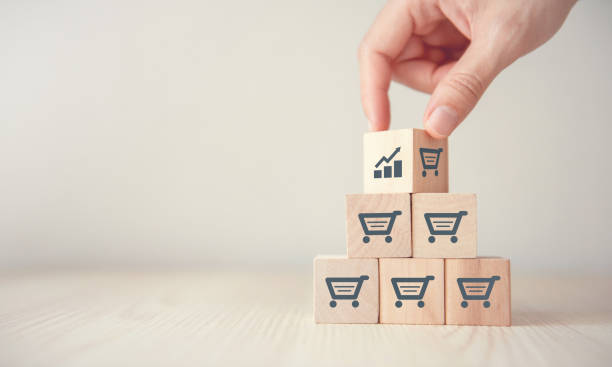
eCommerce sales keep going up. Recent reporting shows U.S. eCommerce sales continuing to climb, with total revenue expected to surpass $1.3 trillion. More consumers are buying online, and the overall market continues to expand year over year, but so do the eCommerce growth challenges that make scaling harder than it looks.
On paper, that should make things easier for brands trying to grow online. For a lot of merchants, it just feels harder than it used to.
The Market Is Bigger. So Is the Competition
eCommerce growth does not just mean more customers. It also means more brands competing for them, often in the exact same channels.
It is easier than ever to launch a store, test a product, and start selling. That accessibility helped fuel eCommerce growth, but it also created a more crowded landscape, adding to the eCommerce growth challenges brands face today. Categories that once had a handful of strong players now have dozens or hundreds.
What that means in practice is simple. Attention is harder to win, and standing out takes more effort than it used to.
Getting Customers Is More Expensive
As competition increases, the cost of acquiring customers rises with it. Paid channels are more saturated, performance fluctuates more often, and what used to scale predictably now requires constant adjustment.
For most brands, this shows up in a few consistent ways:
- Higher cost per acquisition across paid channels
- Lower return on ad spend over time
- More testing required to maintain performance
Growth is still possible, but it comes with more pressure on margins and more effort to maintain momentum.
Expectations Did Not Stay the Same
Customer expectations have increased alongside eCommerce growth. Faster delivery, lower shipping costs, and better communication are no longer differentiators. They are the baseline.
A lot of this shift has been influenced by companies like Amazon. Once customers experience fast, reliable delivery, they expect it everywhere.
eCommerce expectations today include:
- Fast and predictable shipping
- Accurate inventory and order fulfillment
- Clear communication from purchase to delivery
As expectations rise, the margin for error gets smaller.
Growth Now Comes With More Complexity
This is where the disconnect starts to show up. Growth used to mean more orders and more revenue. Now it often means more moving parts behind the scenes.
Brands are no longer relying on a single channel. Many are selling through a combination of direct-to-consumer, wholesale, marketplaces, and partnerships. Each channel adds opportunity, but it also adds complexity.
Operational complexity increases when you add:
- Multiple sales channels
- More SKUs and inventory locations
- Different order types and fulfillment needs
This is the part that does not show up in revenue reports, but it affects day-to-day operations immediately.
The Work Behind the Growth Is Heavier
As businesses expand, the work required to keep everything running smoothly increases. Inventory has to stay accurate across channels. Orders need to move without delays. Fulfillment has to keep pace as volume and order size change.
None of these problems are new. There are just more of them happening at the same time. That is why growth can feel harder, even when revenue is increasing.
This Is Where Things Start to Break
Most brands do not hit a single breaking point. They hit a series of smaller ones that build over time.
Inventory mismatches lead to overselling. Orders take longer to process. Fulfillment becomes less consistent. Teams spend more time fixing issues instead of moving things forward.
These problems usually show up as:
- Inventory drifting out of sync
- Delays in order processing
- Increased manual intervention
- Inconsistent fulfillment performance
Individually, each issue is manageable. Together, they create friction that slows everything down.
How Brands Are Handling This Shift
The answer is not to do less. eCommerce is not slowing down, and neither are customer expectations. The brands that are succeeding are not avoiding complexity. They are getting better at managing it.
That usually starts with tightening up operations. Inventory needs to stay aligned across channels so you are not constantly reacting to stock issues. Orders need to move without manual intervention slowing things down. Fulfillment has to stay consistent, even as order volume and order types change.
It also means being more intentional about how systems work together. Adding new channels or tools without thinking about how they connect is usually where problems start. The goal is not to build a bigger stack. It is to build one that actually works together.
⚡ Slightly stronger (more SEO weight)
The brands that stay ahead are the ones that make their operations more resilient as they grow, so when complexity increases, it does not turn into friction, which is critical as ecommerce growth challenges continue to increase.
Frequently Asked Questions About eCommerce Growth
Why does eCommerce growth feel harder now?
eCommerce growth feels harder because competition has increased, customer acquisition costs are higher, and operational complexity has grown. Brands are managing more channels, more orders, and higher expectations at the same time.
Is eCommerce still growing?
Yes. eCommerce continues to grow year over year, with more consumers shopping online and total sales increasing across categories.
Why are margins tighter in eCommerce?
Margins are tighter due to rising shipping costs, higher advertising costs, and increased competition. These factors make it more expensive to acquire customers and fulfill orders.
What is making eCommerce operations more complex?
Operational complexity comes from managing multiple sales channels, maintaining accurate inventory across systems, and meeting higher customer expectations around fulfillment and delivery.
Do more sales channels always mean more growth?
Not always. Adding more channels can increase revenue opportunities, but it also adds complexity. Without the right systems in place, it can create inefficiencies that offset growth.
Where This Leaves You
eCommerce is still growing, but growth does not look the same as it used to. It comes with more pressure, more competition, and more complexity behind the scenes, which is exactly why eCommerce growth challenges are becoming harder to ignore. The brands that continue to move forward are not the ones chasing every new opportunity, but the ones building operations that can handle that complexity without slowing down.
If things feel harder than they used to, it is not random. It is a reflection of how the market has evolved and what it now takes to keep up.
As your business grows, the real challenge is keeping everything aligned so complexity does not turn into friction. Ordoro helps you manage inventory, shipping, and fulfillment in one place so your operations stay in sync as you scale. Start a free trial or talk to an Ordoro expert to see how you can simplify your operations before things get harder to manage.