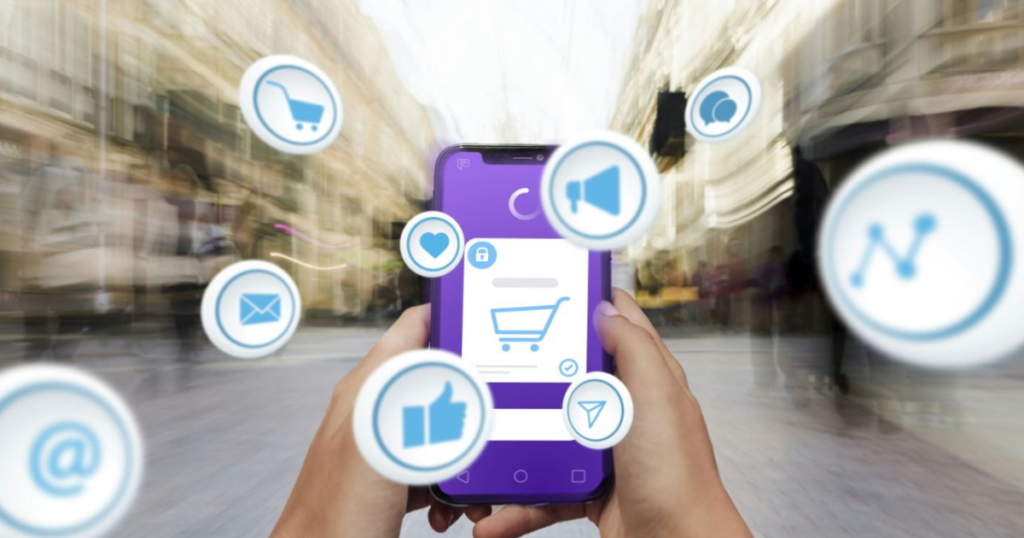
For years, eCommerce brands and retail stores operated in separate worlds. One focused on selling online, while the other relied on in-person experiences. They used different systems, managed inventory differently, and approached fulfillment in completely different ways.
That distinction is quickly disappearing.
Today, retailers are shipping online orders directly from stores, while eCommerce brands are offering faster delivery, local pickup, and more flexible fulfillment options. What used to be two separate models is becoming one connected system.
Some refer to this shift as unified commerce. At its core, it means inventory, orders, and fulfillment are no longer managed in silos. They work together as a single, coordinated operation.
What Is Connected Commerce?
Connected commerce is the practical reality behind this shift. It describes a setup where every part of your business, including sales channels, inventory, and fulfillment, operates in sync.
Instead of juggling disconnected tools or manually reconciling inventory across platforms, businesses are moving toward a single source of truth. Orders flow through one system, inventory updates in real time, and fulfillment decisions are made based on a complete and accurate view of the business.
From the customer’s perspective, this is exactly what they expect. They are not thinking about channels or systems. They simply want to know if a product is available and how quickly it can be delivered.
Why Retail and eCommerce Are Merging
The line between retail and eCommerce has not just blurred. It has effectively disappeared.
Retail stores are now fulfilling online orders, acting as local shipping hubs, and supporting same-day or in-store pickup. At the same time, eCommerce brands are building experiences that extend beyond a single channel, whether that means marketplaces, pop-ups, or hybrid fulfillment strategies.
In practical terms, a store is no longer just a place to sell. It also functions as part of the fulfillment network.
This shift allows larger retailers to compete on speed and convenience, using their physical footprint to get products closer to customers.
The Real Shift: Operations Are the Competitive Advantage
For a long time, brands competed based on product, branding, and marketing channels. While those still matter, they are no longer the only factors that determine success.
Operations have become a critical differentiator.
Today, brands compete on how quickly they can ship, how accurately they manage inventory, and how efficiently they fulfill orders. These operational capabilities directly impact customer experience, especially as expectations for speed and reliability continue to rise.
The question is no longer whether a business is retail or eCommerce. The more important question is how well the operation runs behind the scenes.
Why This Matters for Growing eCommerce Brands
It is easy to assume this shift mainly affects large retailers with physical stores. In reality, it has direct implications for small and mid-sized eCommerce brands as well.
Customer expectations have changed across the board. Fast shipping, accurate inventory, and a seamless buying experience are no longer competitive advantages. They are the baseline.
As larger retailers improve their fulfillment capabilities, they raise the standard for everyone else. Even if a smaller brand operates entirely online, it is still competing in the same environment.
The pressure is not to build physical stores. It is to build a more reliable and efficient operation.
What Connected Commerce Looks Like in Practice
For most growing brands, connected commerce does not require adding complexity. It requires removing it.
In practice, this often means consolidating systems and improving visibility across the business. Inventory should update in real time across all sales channels. Orders should flow through a centralized system. Fulfillment should be streamlined so that shipping is fast, accurate, and predictable.
When these pieces are connected, businesses can make better decisions, reduce errors, and deliver a more consistent customer experience.
The Bottom Lin
“Retail vs eCommerce” is no longer a useful way to think about how businesses operate.
Today, it is all just commerce. Connected, fast-moving, and increasingly dependent on operational efficiency.
The brands that succeed will not be the ones with the most channels. They will be the ones that can execute across those channels without friction.
Frequently Asked Questions
What is the difference between unified commerce and omnichannel?
Omnichannel focuses on offering multiple sales channels to customers. Unified commerce focuses on connecting those channels behind the scenes so that inventory, orders, and fulfillment are managed in one system.
Do small eCommerce businesses need unified or connected commerce?
Yes, but it does not need to be complex. Even smaller brands benefit from having centralized inventory, streamlined order management, and efficient fulfillment processes.
Is connected commerce only for retailers with physical stores?
No. While physical stores can act as fulfillment hubs, the core concept applies to any business that sells across multiple channels or wants better operational visibility.
Why is connected commerce important for fulfillment?
Connected systems allow businesses to process orders faster, reduce errors, and maintain accurate inventory levels. This leads to better customer experiences and more efficient operations.
Simplify Your Operations with Ordoro
As commerce becomes more connected, managing inventory, orders, and shipping separately becomes harder to scale.
Ordoro helps bring these pieces together so you can manage your operations more efficiently from one place. From inventory management to shipping automation, having a connected system makes it easier to keep up with growing demand.
Learn more about how Ordoro helps streamline fulfillment and inventory management.