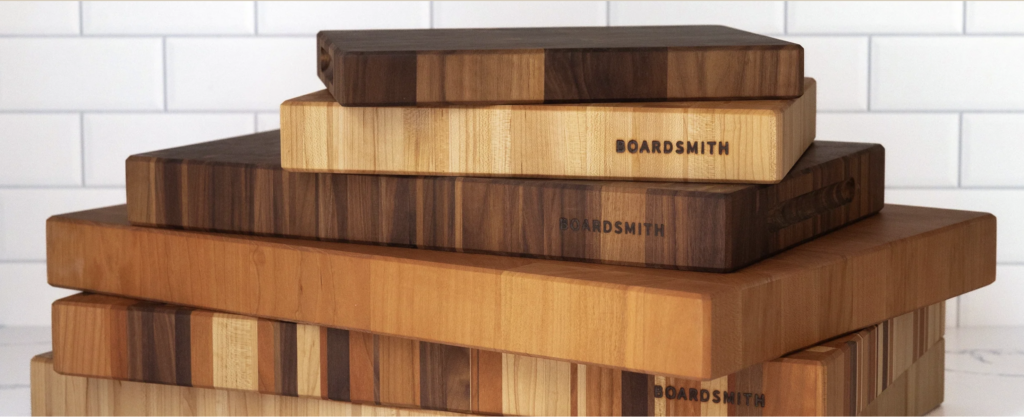
When John Loftis walks onto The Boardsmith’s shop floor each morning, he sees more than a woodworking operation. He sees an eCommerce manufacturing workflow in motion, with a team moving between cutting, planing, sanding, cleaning, and finishing. Six or eight stages of butcher block production may be underway at once. Each craftsman understands where to go and what needs to happen next. John describes it as a dance. The rhythm comes from experience, communication, and a shared commitment to creating an exceptional product.
That commitment has guided The Boardsmith since it was founded in 2005. Based in Frisco, Texas, the company creates handcrafted cutting boards and butcher blocks from maple, walnut, and cherry. Each piece is shaped, sanded, finished, and inspected by a team of artisans. They take pride in small details that customers may not notice. Those details still make a lasting difference in the finished product.
Passing Craftsmanship to the Next Generation
At The Boardsmith, woodworking knowledge is passed down through the traditional progression of apprentice, journeyman, and master craftsman.
John has personally trained a generation of craftsmen. Today, he gets to watch those team members pass their knowledge to the next generation. For him, that process is about more than training employees. It is a way to preserve the skills, discipline, and standards behind a traditional craft.
“There’s this generational aspect that’s a really beautiful thing, and it’s a way of perpetuating this old-style craft that’s such a core value of our business,” John explains in The Boardsmith’s video, A Tradition of Excellence.
That commitment can be seen in every part of the finished board. Chamfers are carefully sanded, finger grooves are smoothed, and surfaces are cleaned and finished to a high standard. The goal is not simply to make another kitchen product. It is to create something durable, functional, and worthy of the reputation the business has built.
Learn more about The Boardsmith’s story and approach to craftsmanship.
What Customers See and What the Workshop Manages
A customer shopping online sees the final product: a beautifully finished cutting board or butcher block selected by wood, size, style, and features. The team at The Boardsmith sees everything required to create it.
Before a finished board can reach a customer, raw lumber must move through several stages of production. Each stage changes what the product is, what work remains, and how the team plans what to make next.
The process begins with raw lumber. Once that lumber is turned into panels, The Boardsmith begins actively tracking it as inventory. Those panels are organized into small, medium, and large sizes and become the foundation for the boards the team will produce.
From there, the panels are cut into rough boards that have reached their basic dimensions but have not yet been sanded or cleaned. Those rough-cut products then move into the finishing stage, where they are sanded, cleaned, and prepared for final details. Once completed, the boards are combined with any required components, such as feet or bumpers, before becoming the finished products customers see online.
Every stage depends on the one before it. The shop needs to know what customers have ordered, what materials are available, how many boards must be made, and which finished pieces belong to each waiting order.
Ordoro connects Shopify orders with materials, production, inventory, and fulfillment. The Boardsmith can then track products as they move from wood panels to rough-cut boards, finished goods, and waiting customer orders.
Turning Customer Demand Into Shop-Floor Work
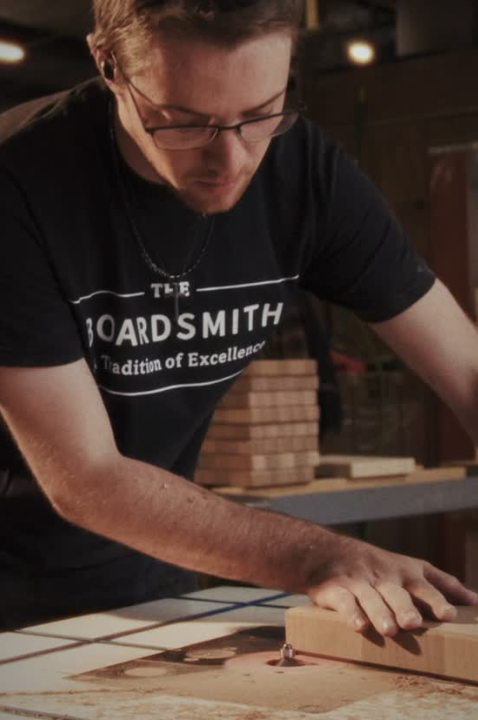
The Boardsmith uses incoming Shopify orders to help determine what the workshop needs to produce.
The team organizes customer orders into batches that can move through production together. Those orders are allocated and tagged so they can be followed as the boards progress through the shop.
The Boardsmith works from the orders already waiting to be fulfilled. This connects customer demand with each stage of production. It also helps the team decide what should move across the shop floor next. The careful process behind each board remains intact.
That keeps the important transition from Shopify demand to production, aligns with the newly confirmed workflow, and avoids relying on details that may belong to their previous process.
Bringing the Inventory System Onto the Shop Floor
As The Boardsmith’s production process has evolved, the team has found new ways to connect the work happening at each station with the inventory and customer orders managed through Ordoro’s inventory management capabilities.
Using Ordoro’s API, the operations team built a lightweight internal application that runs on tablets throughout the workshop. Each screen is designed around a specific stage of production, giving employees a simple way to record what is happening without stepping away from their work or relying on a manager to enter every update.
The application supports three key workstations. During fabrication, workers record panels created from raw wood. At strip sanding, those panels are converted into rough boards. At finish sanding, employees can account for boards that are lost or damaged before fulfillment.
Behind the scenes, the application keeps inventory and customer orders synchronized with Ordoro. Shop managers organize orders into production batches, while employees use the tablets to update each board’s progress as the work happens. At the finish sanding station, the system can match a completed board to the appropriate waiting order and move that order forward.
When a board is lost or damaged, the employee working at that station can update the order immediately. This gives the people closest to the work a direct role in keeping inventory current while reducing manual tracking for shop managers.
By connecting production activity with current inventory and waiting orders, The Boardsmith has created the kind of coordinated workflow that can help growing product businesses reduce manufacturing lead times and keep eCommerce orders moving.
The technology does not interrupt the rhythm of the workshop. It was built around it.
Technology in Service of the Craft
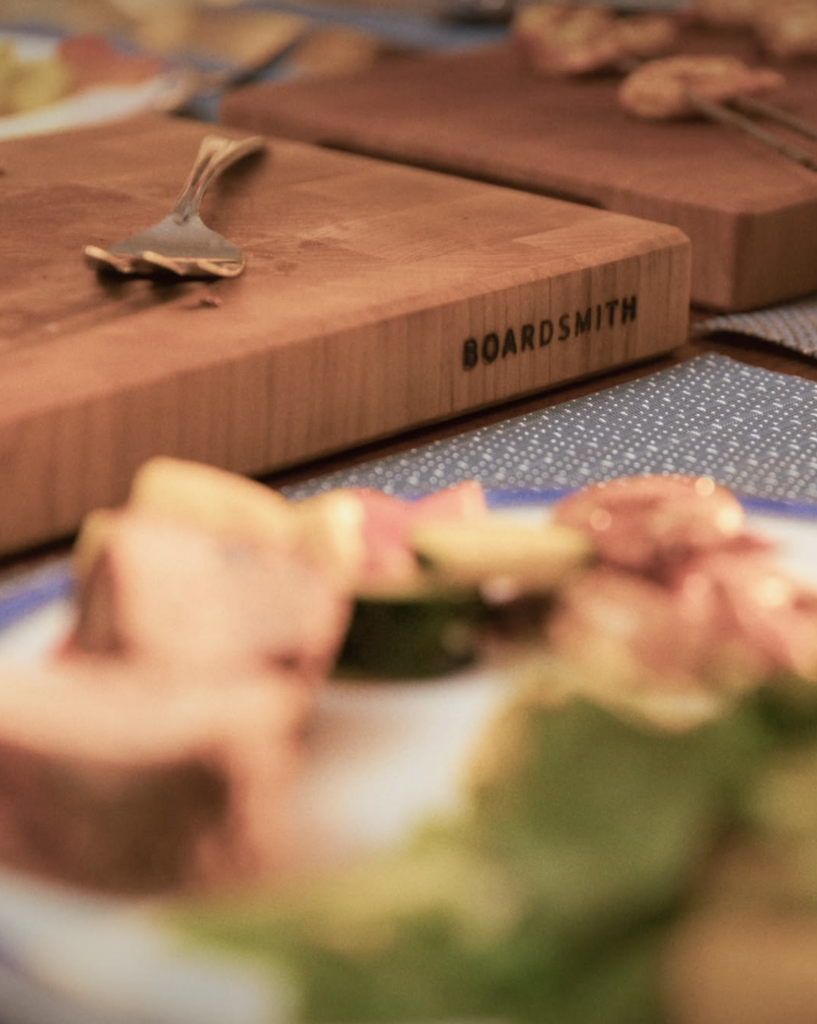
The most important parts of The Boardsmith’s process still happen in the hands of its craftsmen. They understand how wood behaves, recognize when a board meets the company’s standards, and know when a surface, groove, edge, or finish needs more attention.
The system surrounding that work was designed to support those decisions, not replace them. By connecting shop-floor tablets with Ordoro, The Boardsmith can reflect production activity in its inventory and order records as the work happens.
That structure supports the rhythm John sees on the shop floor each morning. It gives the people closest to the work a direct role in keeping inventory and customer orders current while allowing the company to continue making every board with the care that built its reputation.
As one generation of craftsmen trains the next, The Boardsmith is carrying more than a woodworking tradition forward. It is building the people, processes, and operational foundation needed to sustain that tradition for years to come.
See the Craftsmanship for Yourself
Explore The Boardsmith’s collection of handcrafted cutting boards and butcher blocks, made by its team of artisans in Frisco, Texas. Explore The Boardsmith
Build an Operation Around the Way You Make and Sell
Your products and production process may look different, but the challenge is often the same: connecting customer demand with inventory, manufacturing, and fulfillment.
See how Ordoro could support your workflow with a personalized walkthrough built around the way your business operates. Get a Personalized Ordoro Walkthrough
- Commerce Corner: Big Spending, Small Business Wins & Fresh Features
- Small Businesses Are Making a Very Big Economic Impact
- Shoppers Just Spent Nearly $10 Billion. And It’s Not Even Black Friday Yet.
- Etsy Wants Shipping to Feel Cheaper. What Does That Mean for Sellers?
- Your eBay Shipping Costs Might Look Different This Holiday Season