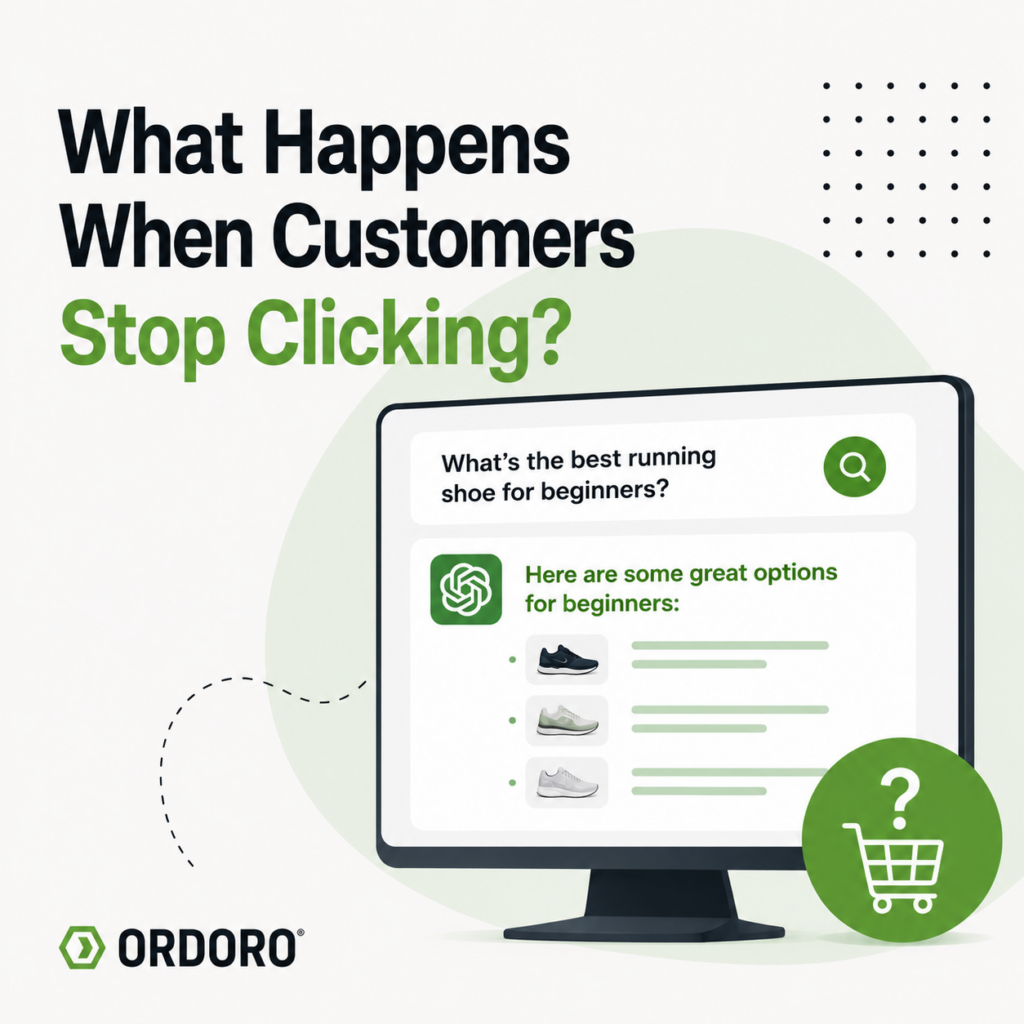
For years, eCommerce brands have focused on one goal: getting found. The playbook was familiar. Create content. Optimize for search engines. Rank on Google. Earn the click. Today, however, many marketers are paying closer attention to Answer Engine Optimization (AEO), a growing strategy focused on helping brands appear in AI-generated answers and recommendations.
But what happens when customers stop clicking?
As AI-powered search tools become more common, shoppers are increasingly getting answers without ever visiting a website. Whether they’re using ChatGPT, Google’s AI Overviews, Perplexity, or another AI assistant, consumers can now ask questions and receive recommendations in seconds. For brands, that’s creating a new challenge. It’s no longer just about being found. It’s about being referenced.
Search Is Changing. Again.
Traditional search worked like a funnel. A customer searched for a product, browsed a list of results, visited several websites, and eventually made a purchase decision. Today, that process is becoming much shorter.
Instead of searching “best standing desk for a home office” and reviewing multiple articles, a shopper might simply ask an AI assistant for recommendations. The assistant provides an answer, summarizes the options, and helps narrow the decision.
That doesn’t mean search is disappearing. It means discovery is evolving. For eCommerce brands, the question is no longer just “How do I rank?” It’s increasingly becoming “How do I become part of the answer?”
Being Found Doesn’t Always Mean Being Visited
For years, ranking on the first page of Google was one of the most valuable assets a brand could have. Now, even if your content is surfaced by an AI system, there’s no guarantee a customer will click through to your website. That’s forcing brands to think differently about what success looks like.
Instead of focusing solely on rankings and traffic, many marketers are beginning to pay closer attention to:
- Brand mentions
- Citations
- Product recommendations
- Customer reviews
- Authority within a niche
In other words, the goal is shifting from being found to being trusted.
What This Means for Online Brands
For smaller eCommerce brands, this shift may feel intimidating. The good news is that many of the same qualities that helped businesses succeed in traditional search still matter today. Clear product information, helpful content, customer reviews, and demonstrated expertise all help build trust with both shoppers and AI systems.
The difference is that brands may need to think more carefully about the questions customers are asking and whether their content provides useful answers. If someone asked an AI assistant about your product category, would your brand have a reason to be included in the response?
That’s becoming an increasingly important question.
Five Ways to Become Part of the Answer
No one has a guaranteed formula for appearing in AI-generated answers. Search platforms are evolving quickly, and recommendation systems continue to change.
That said, there are several steps eCommerce brands can take today to improve visibility.
1. Answer Customer Questions Clearly
Think about the questions customers ask before making a purchase.
- How long does shipping take?
- Is this product compatible with my setup?
- What’s the difference between these two options?
- Who is this product best for?
The easier it is to find clear answers on your website, the easier it is for both customers and AI systems to understand your content.
2. Add FAQs to Key Pages
FAQ sections don’t just help customers. They also create structured, question-and-answer content that AI systems can easily interpret.
Consider adding FAQs to:
- Product pages
- Category pages
- Help center articles
- Blog posts
3. Write Like a Human, Not a Search Engine
Customers are increasingly searching in complete sentences and conversational language.
Instead of stuffing pages with keywords, focus on answering real questions in a natural way. Content that sounds like a helpful conversation often performs better than content written solely for algorithms.
4. Keep Product Information Complete
AI tools can only work with the information available.
Make sure your product pages include:
- Detailed descriptions
- Specifications
- Dimensions
- Compatibility information
- Shipping details
- Common use cases
The more complete your information is, the more useful your content becomes.
5. Build Trust Through Reviews and Expertise
AI recommendation systems often look for signals that indicate credibility.
Customer reviews, expert insights, original content, and firsthand experience can all help strengthen your brand’s authority within a category.
Can AI Find Your Store?
Before you leave, run through this quick checklist:
- Product pages answer common customer questions.
- FAQs are included on important pages.
- Product information is accurate and complete.
- Content is written in natural, conversational language.
- Customer reviews are actively collected and displayed.
- Blog content demonstrates expertise in your niche.
The goal isn’t to chase every new algorithm. It’s to make your content as helpful, trustworthy, and easy to understand as possible.
Frequently Asked Questions
What is Answer Engine Optimization (AEO)?
Answer Engine Optimization (AEO) is the practice of creating content that can be surfaced in AI-generated answers and recommendations. The goal is to help search engines and AI assistants understand and reference your content when users ask questions.
Is SEO still important?
Yes. Traditional search engines still drive significant traffic for eCommerce businesses. AEO should be viewed as a complement to SEO, not a replacement for it.
How is AEO different from SEO?
SEO focuses on helping webpages rank in search results. AEO focuses on helping content appear in direct answers generated by AI-powered tools such as ChatGPT, Perplexity, and Google’s AI Overviews.
How can eCommerce brands improve visibility in AI search?
Brands can improve visibility by answering customer questions clearly, maintaining complete product information, adding FAQs, collecting reviews, and creating content that demonstrates expertise.
Will AI-powered search replace traditional search?
Most experts expect AI-powered search and traditional search to coexist. However, the way customers discover products and information is likely to continue evolving.
The Bottom Line
The future of search may involve fewer clicks, but it won’t involve less competition. As customers increasingly turn to AI-powered tools for answers and recommendations, Answer Engine Optimization (AEO) is becoming an important part of how ecommerce brands approach online visibility. Businesses will need to think beyond rankings and traffic alone.
The businesses that succeed won’t necessarily be the ones with the most content. They’ll be the ones that build enough trust, authority, and expertise to become part of the answer.
As eCommerce discovery continues to evolve, merchants need the right systems in place to stay agile. Ordoro helps businesses streamline inventory, shipping, and order management so they can spend less time managing operations and more time growing their brand. Want to learn how Ordoro can support your eCommerce strategy? Talk to an Ordoro expert today.