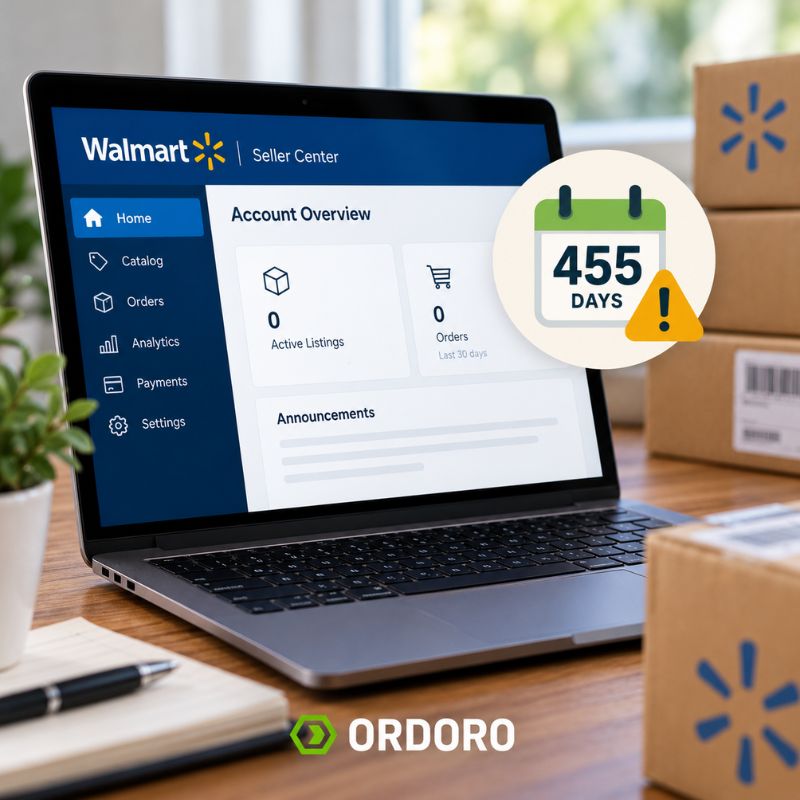
You know that sales channel you set up a while ago, got approved for, and then quietly moved to the bottom of your to-do list? Maybe you planned to come back to it after the holidays. Maybe another marketplace was performing better, or maybe life got busy and you simply forgot about it. Well, Walmart has a new reason to check in.
On October 5, Walmart Marketplace announced a policy allowing it to suspend seller accounts that have been inactive for 455 consecutive days. That’s roughly 15 months without activity, which sounds like plenty of time until you remember how quickly a year can disappear when you’re running an online business.
The good news is that Walmart isn’t planning to shut down accounts without warning. Sellers will receive notifications before a suspension, and there’s an opportunity to appeal. Still, if you’ve been keeping a Walmart storefront on the back burner, this update is worth knowing about.
Why Walmart Is Paying Attention to Dormant Seller Accounts
According to Walmart, the new policy is part of its Trust and Safety efforts. The company wants to reduce the risk of abandoned seller accounts being compromised, which is a reasonable concern when you consider how much business information can be connected to a marketplace account.
Think about an old storefront that nobody has checked in more than a year. The original employee who set it up may have left the company, contact information might be outdated, and nobody may be watching for unusual activity. Even if the store isn’t actively selling, an overlooked account can still create security concerns.
Walmart’s updated policy identifies an account as dormant after 455 consecutive days of inactivity. Its guidance describes inactivity in terms of sales, Seller Center logins, and API usage through the Developer Portal. In other words, this isn’t simply a policy targeting stores with slow sales. Walmart is looking at whether an account is being used.
That distinction matters for merchants who keep a Walmart account available while focusing on other parts of their business. A quiet storefront and an abandoned storefront aren’t necessarily the same thing.
What Happens After 455 Days?
Reaching the inactivity threshold doesn’t mean your Walmart account automatically disappears. Under the new policy, an account that remains inactive for 455 consecutive days may be suspended.
Before taking that step, Walmart says it will send email and SMS notifications to give sellers an opportunity to re-engage. That’s helpful, assuming those messages reach someone who’s still paying attention.
If the account is suspended for inactivity, the seller has 90 days to submit an appeal requesting reactivation. Walmart also warns that accounts suspended without a resolved appeal may eventually be terminated.
And suspension is more than an annoying message on your dashboard. Under Walmart’s broader account policies, suspended listings can become unavailable to shoppers, Seller Center access may be restricted, and payments can be placed on hold.
For a seller who planned to return to Walmart during a future sales season, discovering that an account has been suspended could turn a simple relaunch into a much bigger project.
The Storefront You Forgot Might Still Be Part of Your Plans
This is where the policy becomes especially relevant for small and midsize eCommerce businesses.
Not every merchant treats every marketplace as a year-round priority. Maybe you launched on Walmart to test a new audience, but your Shopify store ended up getting most of your attention. Perhaps you sell seasonal products and decided to pause your Walmart efforts until demand picked up again. Or maybe your business expanded onto Amazon and eBay, leaving Walmart waiting for its turn.
Those decisions aren’t necessarily mistakes. Sometimes focusing on your strongest channels is exactly what makes sense for your business.
But there’s a difference between deliberately pausing a sales channel and forgetting that it still exists.
If Walmart is part of your future plans, keeping track of the account is just as important as remembering the products you intended to sell there. A marketplace you aren’t actively using today could still be valuable next year, especially if your business changes direction or you decide to reach a new group of shoppers.
The last thing you want is to finally make time for that expansion, only to discover that your account needs to be reinstated first.
A Little Account Maintenance Could Save a Bigger Headache
If you haven’t opened Walmart Seller Center in a while, this is a good excuse to check in. You don’t need to start listing products or rethink your entire marketplace strategy. Just make sure your account is still accessible, your information is current, and you know where things stand.
One detail worth paying attention to is how Walmart defines inactivity. The policy considers sales, Seller Center logins, and API usage through the Developer Portal, so a storefront with no recent orders isn’t necessarily an abandoned account. A seasonal seller who regularly checks in is in a different position from someone who hasn’t touched their account in well over a year.
It’s also worth checking who’s receiving Walmart’s notifications. Maybe the employee who originally managed the account has moved on, or the email address associated with the store is one you rarely open. Walmart says it will send warnings before an inactivity-related suspension, but those reminders won’t be particularly helpful if nobody sees them.
And if your account has already been suspended for inactivity, don’t put the notification aside for later. Walmart gives sellers 90 days to submit an appeal requesting reactivation. That doesn’t guarantee reinstatement, but missing the window could make returning to the marketplace more difficult.
For merchants selling through several storefronts, this is also a reminder that multichannel selling involves more than keeping orders moving. Every marketplace has its own policies, account requirements, and occasional surprises. Staying aware of those details is part of keeping your options open as your business grows.
The point isn’t to spend more time babysitting every marketplace account. It’s to make sure a sales channel you’ve worked to establish is still available when you’re ready to use it.
Frequently Asked Questions About Walmart Marketplace’s Inactive Account Policy
How long can a Walmart Marketplace seller account remain inactive?
Under Walmart’s policy announced October 5, 2026, seller accounts that remain inactive for 455 consecutive days may be suspended.
What counts as inactivity on Walmart Marketplace?
Walmart’s Trust and Safety policy describes inactivity in terms of no sales, no Seller Center logins, and no API usage through the Developer Portal. Merchants should review their account activity rather than assuming that a lack of orders alone means their account is dormant.
Will Walmart notify sellers before suspending an inactive account?
Yes. Walmart says it will send email and SMS notifications before suspending an account for inactivity, giving sellers an opportunity to re-engage.
Can sellers reactivate a Walmart account suspended for inactivity?
Sellers can submit an appeal within 90 days of an inactivity-related suspension to request reactivation. Reinstatement is not guaranteed, and accounts without a resolved appeal may be terminated.
Does this policy affect sellers who only use Walmart seasonally?
Seasonal sellers aren’t automatically suspended simply because they go several months without sales. However, merchants who leave an account entirely inactive for 455 consecutive days could be affected.
Don’t Let a Good Sales Channel Become a Forgotten One
Walmart’s new inactivity policy isn’t necessarily bad news for sellers. Protecting abandoned accounts makes sense, and the company is giving merchants advance notice and an opportunity to appeal before an account is permanently lost.
But the update is a useful reminder that expanding onto new marketplaces comes with responsibilities beyond uploading products and waiting for orders. Sometimes the smallest administrative tasks, like checking an account or updating a contact email, can save you from a much bigger headache down the road.
If Walmart is part of your eCommerce strategy, even if it’s not your busiest channel right now, it’s worth keeping that door open.
And when you’re ready to make more of your Walmart storefront, Ordoro can help you manage Walmart orders and shipping. Alongside your other sales channels, without turning every marketplace into a separate daily juggling act.
See how Ordoro integrates with Walmart Marketplace →
- Haven’t Checked Your Walmart Seller Account Lately? You Might Want To.
- eBay Sellers Got a Glimpse of Higher Ad Costs. Then Came the Explanation.
- Small Brands Could Have a Big Holiday Advantage
- Meta Muse Can Shop Like a Customer. Should Merchants Treat It Like One?
- Print Barcode Labels While Receiving Inventory in Ordoro