Update: We originally published this article in 2009 after reading an interview about free shipping for eCommerce and data-driven marketing. Customer expectations, shipping costs, and eCommerce technology have changed considerably since then, so we updated the article with practical guidance for today’s merchants.
Free shipping can make an online offer more attractive, but it is not actually free. The merchant still pays the carrier, which means the cost must come from product margins, higher prices, larger orders, or another part of the business.
That does not mean every eCommerce business should avoid it. It means merchants should treat free shipping as a strategy they can test and measure rather than a requirement they must follow.
Why Customers Respond to Free Shipping
Shipping charges can create friction during checkout, especially when customers do not see the cost until the final step. A clear free-shipping offer gives shoppers a simpler idea of what they will pay and can make the purchase feel like a better value.
However, the effect will vary by store. Product prices, package dimensions, delivery distance, competition, and customer expectations all influence whether free shipping improves results.
Common Ways to Offer Free Shipping
Merchants do not have to offer free shipping on every order. Several approaches can make the promotion more manageable.
Order minimums
A merchant can offer free shipping only after the cart reaches a certain value. This approach may encourage customers to add another item while helping the business absorb the shipping cost through a larger order.
Selected products
Free shipping may work well for lightweight products, high-margin products, bundles, or inventory that the business wants to move more quickly.
Limited promotions
A temporary free-shipping promotion can support a holiday campaign, product launch, slow sales period, or customer-retention effort without becoming a permanent expense.
Specific shipping methods
Merchants can limit the offer to an economical service rather than including expedited delivery. Customers who want faster shipping can still pay for an upgraded option.
Specific locations
Shipping costs vary by destination. Some businesses limit free shipping to certain regions or exclude locations that are unusually expensive to serve.
Calculate the Cost Before Launching
Before offering free shipping, review the actual cost of fulfilling an order. That includes more than the carrier charge.
Consider:
- Average product margin
- Average order value
- Package weight and dimensions
- Packaging materials
- Destination zones
- Residential and other carrier fees
- Return shipping costs
- Labor involved in fulfillment
A promotion that increases orders can still hurt the business when the additional revenue does not cover the shipping expense.
This is also where better shipping visibility matters. Merchants that can compare shipping options and understand the true cost of each order are in a stronger position to decide whether free shipping is sustainable.
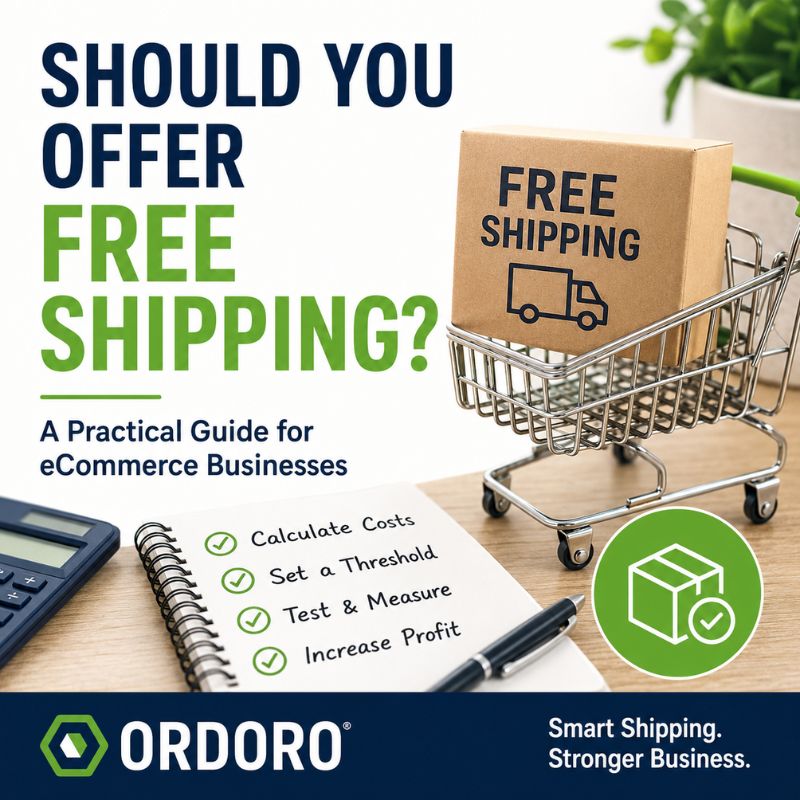
Set a Free-Shipping Threshold
One common approach is to place the free-shipping threshold slightly above the store’s current average order value.
For example, a store with a $45 average order value might test free shipping on orders over $60. The goal is to encourage customers to spend more while keeping the offer financially sustainable.
The right threshold depends on the store’s margins and shipping costs. It should come from the business’s own data rather than a general industry benchmark.
Measure More Than Conversion Rate
A higher conversion rate does not automatically mean the promotion succeeded. Merchants should also review:
- Average order value
- Gross margin per order
- Shipping cost per order
- Cart abandonment
- Number of items per order
- Return rate
- Repeat purchases
- Overall profit
A store may gain more orders but earn less from each one. The most useful measurement is whether the strategy improves the business’s overall profitability.
Test Free Shipping Against Other Offers
Free shipping is only one possible incentive. Merchants can compare it with:
- A percentage discount
- A fixed-dollar discount
- Flat-rate shipping
- Product bundles
- A free gift
- Loyalty rewards
Different audiences may respond to different offers. Testing helps merchants learn what customers value without relying on assumptions.
Build a Shipping Strategy Around Your Business
There is no single shipping offer that works for every eCommerce business. A lightweight product with strong margins creates a very different cost structure from a large or fragile product that travels across multiple shipping zones.
Start with your own order and shipping data. Test one approach, measure the complete financial result, and adjust the offer as your costs and customer behavior change.
Free Shipping FAQs
Is free shipping really free for eCommerce businesses?
No. The merchant still pays the shipping cost. Businesses usually cover it through product margins, higher prices, larger order values, or limits on which orders qualify.
What is a good free-shipping threshold?
A good threshold is often slightly higher than the store’s current average order value. However, the final number should reflect product margins, shipping costs, and the amount customers are likely to add to their carts.
Does free shipping increase sales?
It can improve conversion rates or encourage larger orders, but it does not guarantee higher profit. Merchants should measure average order value, shipping cost, gross margin, and overall profitability.
Should every online store offer free shipping?
No. Free shipping may not work for stores that sell heavy, oversized, fragile, or low-margin products. Flat-rate shipping, limited promotions, or product-specific offers may be more sustainable.
How can eCommerce businesses reduce the cost of free shipping?
Businesses can set order minimums, use economical shipping services, limit eligible destinations, optimize packaging, and compare carrier rates before purchasing labels.
Make Free Shipping Easier to Manage
A free-shipping strategy works best when merchants can compare rates, choose cost-effective services, and keep fulfillment organized without adding extra manual work.
Ordoro helps eCommerce businesses compare shipping options, create labels, manage orders, and streamline fulfillment from one place. Start Your Free Trial Today