

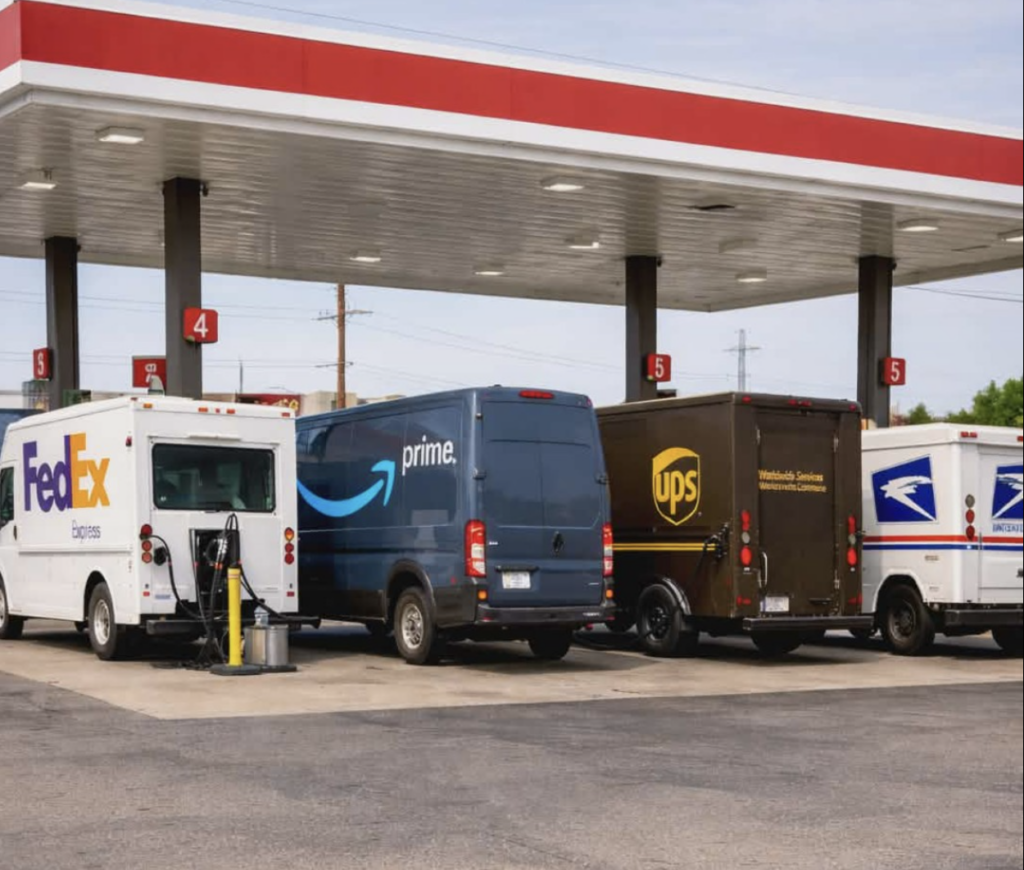
Shipping costs are rising again, and for most eCommerce businesses, this is not coming as a surprise. Over the past few weeks, Amazon, UPS, FedEx, and the United States Postal Service have all introduced new or increased fuel surcharges in response to rising gas prices.
Why Shipping Costs Are Rising Right Now
What stands out this time is not just the increase itself, but how broadly and quickly it is happening. Multiple carriers are adjusting pricing at the same time, which leaves merchants with fewer ways to avoid the impact. When one carrier moves, businesses can respond by shifting volume. When the entire carrier landscape moves together, the pressure lands directly on margins.
What is happening right now comes down to three shifts:
- carriers are raising prices at the same time
- surcharges are being used more aggressively
- and those increases are sticking
The immediate trigger is higher fuel costs tied to geopolitical instability involving Iran and its impact on global oil supply. When oil markets tighten, transportation costs rise quickly, and carriers respond with surcharges. That part is straightforward. When transportation costs rise, carriers add surcharges. But that is only the visible part of the story.
The deeper issue is that surcharges give carriers a fast way to raise prices without resetting the whole conversation around base rates. They can move quickly, change frequently, and be framed as temporary even when the financial impact lasts much longer. For carriers, that creates flexibility. For merchants, it creates uncertainty.
That is why these moments matter. They tend to expose the true cost structure of your operation. If your margins only work when shipping stays predictable, then they are not as resilient as they need to be.
Fuel surcharges also have a way of becoming the new normal. Even when fuel prices stabilize, pricing rarely returns all the way back to where it started. Each round of increases resets expectations and raises the baseline cost of fulfillment.
For eCommerce operators, this creates a structural challenge. Customer expectations around fast and affordable shipping have not changed, but the cost to deliver on those expectations keeps rising. That gap is where margins get squeezed.
The businesses that prepare well for this are not waiting for rates to normalize. They are already:
- auditing their carrier mix
- reviewing which service levels are actually necessary
- tightening packaging to reduce dimensional weight
- revisiting free shipping thresholds before higher costs compound further
The real question is not whether shipping costs will come back down. It is whether your operation is built to adapt when they do not.

What This Means for eCommerce Operators
When multiple carriers raise prices at the same time, shipping stops being a background expense and becomes something you have to actively manage.
At lower volumes or during stable pricing periods, inefficiencies are easier to ignore. When costs increase, those same inefficiencies show up quickly. Decisions like which service level you choose or how an order is packaged start to have a direct impact on your margins.
This is where the gap between operators becomes clear, especially as carriers continue rethinking how they price and prioritize eCommerce volume.
Some businesses absorb these changes without realizing where the cost is coming from. They see margins compress, but cannot point to a single decision that caused it.
Others adjust quickly because they understand the impact their shipping decisions have on profitability, and they know where to look when costs change.
That difference has very little to do with scale. It comes down to how shipping is managed.
Businesses that treat shipping as a fixed process tend to absorb higher costs. Businesses that treat it as a system they can actively adjust tend to stay in control.
What You Should Do Right Now
Rising fuel surcharges are not something you can wait out. If shipping costs are increasing, the right move is to adjust how you operate as quickly as possible.
There are a few practical steps that make an immediate difference.
1. Understand where your shipping spend is actually going
Start by looking at the last 30 days of shipments. This will usually reveal patterns, including which carriers, zones, or service levels are driving the increase. Most businesses find that a portion of their orders are more expensive than expected simply because of default choices.
2. Stop relying on a single carrier or default service level
Carrier pricing varies significantly depending on weight, distance, and delivery speed. Matching each shipment to the most cost-effective option, rather than the most familiar one, is one of the fastest ways to reduce unnecessary spend.
3. Set clear rules for when speed actually matters
Expedited services are often applied too broadly, and when fuel surcharges increase, they become even more expensive. Defining when faster shipping is required, and when it is not, helps protect margins without compromising the customer experience.
4. Revisit your free shipping strategy
Free shipping remains an effective lever, but it needs to reflect current costs. If you are adjusting pricing or thresholds, this is where it becomes critical to understand how to price for profit without losing sales.
5. Fix the operational details that quietly increase cost
Packaging choices, dimensional weight, and how shipments are grouped all influence cost. When surcharges rise, these details start to matter much more.
The Bigger Shift eCommerce Brands Should Be Watching
What ties all of this together is control.
The businesses that navigate periods like this most effectively are not reacting to each pricing change individually. They are building systems that allow them to adapt continuously, because they assume costs will keep changing.
That starts with visibility into real-time rates and costs, and it extends into automation. When shipping decisions are made dynamically, based on current data rather than fixed rules, businesses can respond to changes without increasing operational complexity.
Most businesses do not operate this way.
They rely on:
- defaults
- habits
- past assumptions about what shipping should cost
That works when pricing is stable. It breaks down quickly when it is not.
This is where platforms like Ordoro play a role. By centralizing shipping operations, comparing rates across carriers, and automating decision-making, they make it possible to stay flexible without adding manual work.
In an environment where costs are changing quickly, flexibility is not just an advantage. It is what protects your margins.
Frequently Asked Questions About Rising Shipping Costs
Why are shipping costs increasing right now?
Shipping costs are rising due to higher fuel prices driven by global oil market instability, including geopolitical tensions involving Iran. At the same time, carriers are using surcharges to adjust pricing more dynamically, which amplifies the impact on merchants.
Are fuel surcharges temporary or permanent?
They are usually introduced as temporary, but in practice, they often raise the long-term baseline cost of shipping. Even when fuel prices stabilize, rates rarely return fully to previous levels.
How can eCommerce businesses reduce shipping costs quickly?
Start by analyzing recent shipments to identify cost drivers. Then adjust carrier selection, service levels, packaging, and free shipping thresholds. Small operational changes can have an immediate impact on margins.
Should I raise my prices or adjust my shipping strategy?
In most cases, adjusting your shipping strategy first is more effective. Optimizing carrier mix, service levels, and packaging can reduce costs without negatively impacting conversion rates.
What is the biggest mistake businesses make when shipping costs rise?
Treating shipping as a fixed expense. Businesses that rely on default settings or static processes tend to absorb higher costs, while those that actively manage shipping decisions are better able to protect margins.
How can I protect my margins as shipping costs continue to rise?
Focus on flexibility. Use tools and processes that allow you to compare rates, automate decisions, and adapt quickly as carrier pricing changes.
The Bottom Line
You cannot control fuel prices, and you cannot control when carriers introduce new surcharges. What you can control is how your business responds.
The companies that come out of periods like this in a stronger position are not the ones waiting for costs to stabilize. They are the ones that treat shipping as a system, not an expense. They understand where their money is going, they adjust quickly, and they build operations designed to adapt as conditions change.
Most businesses will feel these cost increases after the fact. The ones that stay ahead of them are already making changes. If you are not sure where your margins are being impacted, or what to adjust first, this is the time to take a closer look.
Talk to an eCommerce expert who understands how shipping decisions affect profitability, and where small changes can have an immediate impact. That includes how you compare rates across carriers, how you route orders, and even where your inventory is positioned. Small adjustments in these areas can significantly reduce shipping costs without changing your customer experience.
Book a demo and see how you can take control of your shipping operations before costs compound further.