Every few months, it seems like there’s another major announcement from the shipping and logistics world. A company acquires a competitor. A new service launches. A supply chain business changes hands. Together, these stories reveal the supply chain trends shaping the future of eCommerce.
For eCommerce merchants, it’s natural to wonder what these headlines actually mean. Will shipping rates change? Should you expect service disruptions? Is it time to rethink your fulfillment strategy? Those are fair questions, especially when one of the world’s largest shipping companies is involved.
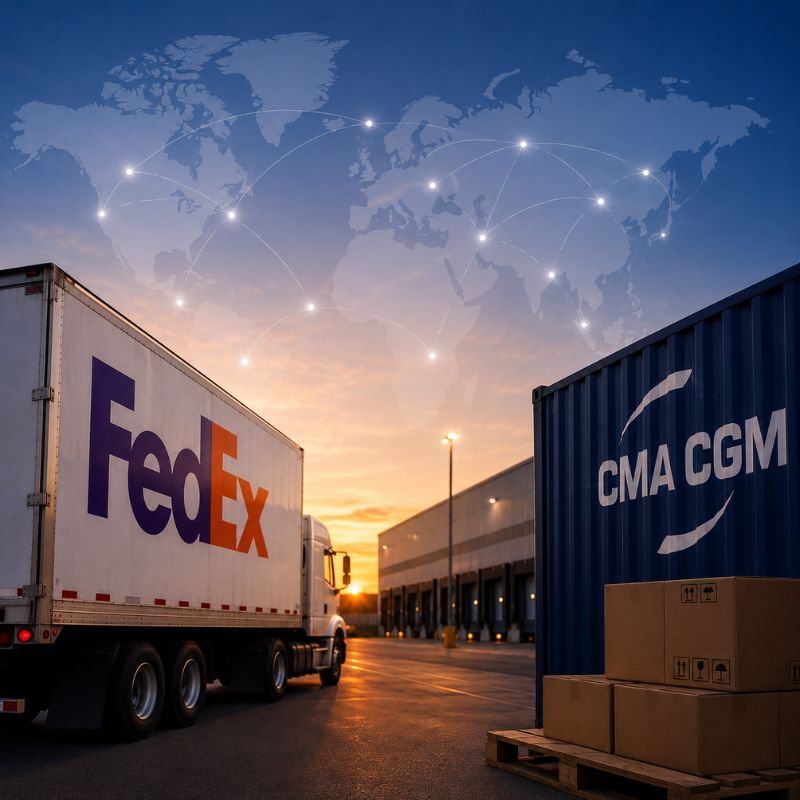
FedEx recently announced it will sell its FedEx Supply Chain business to global shipping and logistics company CMA CGM for $1.4 billion. At first glance, it sounds like the kind of corporate news that only matters to investors. But the announcement highlights a much bigger trend that’s shaping the future of eCommerce logistics.
What Merchants Need to Know
The good news is that this announcement isn’t expected to change how most eCommerce businesses ship their orders. FedEx has said it will continue providing transportation services through a commercial agreement after the sale closes, and there have been no announced changes to shipping rates or delivery services as part of the transaction.
For most merchants, it’s business as usual.
At a Glance
- No announced changes to FedEx shipping rates.
- No immediate impact on FedEx shipping services.
- FedEx will continue providing transportation services after the sale closes.
- The transaction is expected to close following regulatory approval.
That doesn’t mean the announcement should be ignored. Instead, it’s worth understanding why the deal happened and what it says about the direction of the logistics industry.
Why FedEx Is Selling Its Supply Chain Business
FedEx says the sale is part of its broader strategy to streamline the company and focus on its core transportation business. Over the past several years, the company has been restructuring its operations through initiatives designed to improve efficiency, reduce costs, and strengthen its global delivery network.
Selling FedEx Supply Chain allows the company to sharpen that focus while continuing to support customers through a commercial agreement with CMA CGM. Rather than trying to manage every part of the logistics ecosystem, FedEx is concentrating on the transportation services that have long been at the heart of its business.
For CMA CGM, the strategy is different. The global shipping and logistics company sees the acquisition as an opportunity to strengthen its logistics presence in North America and expand the end-to-end supply chain services it offers customers.
Different strategies. The same objective: building stronger businesses for the future.
The Logistics Industry Is Changing
FedEx’s announcement isn’t happening in isolation.
The logistics industry has spent the last several years adapting to a wave of change driven by eCommerce growth, rising customer expectations, and continued investments in automation and technology. According to the U.S. Census Bureau, eCommerce sales now account for roughly 16% of all retail sales in the United States, and that percentage continues to grow. As online shopping expands, so does the pressure on logistics companies to move products faster, more efficiently, and at a lower cost. That’s why companies across the supply chain continue to rethink their operations.
Some are investing in automation. Others are expanding through acquisitions. Some, like FedEx, are narrowing their focus to strengthen the parts of the business where they believe they can create the most value. For merchants, it’s a reminder that the logistics landscape will continue to evolve.
What This Means for eCommerce Merchants
Most eCommerce businesses won’t need to make any immediate changes because of this announcement. Instead, think of it as an opportunity to evaluate your own fulfillment strategy.
As your business grows, it’s easy to accumulate more software, more shipping partners, and more manual processes. Each new addition may solve a specific problem, but over time those solutions can create unnecessary complexity that slows your team down.
This is a good time to ask a few simple questions:
- Are you relying too heavily on a single carrier?
- Do you regularly compare shipping rates and carrier performance?
- Are your inventory and shipping systems connected?
- Can your fulfillment process adapt if market conditions change?
Those questions are likely to have a bigger impact on your business than any single acquisition announcement.
The Bigger eCommerce Trend
The biggest lesson from this announcement isn’t about the sale itself. It’s about adaptability. The companies shaping the future of logistics aren’t standing still. They’re continuously evaluating how to become more efficient, more focused, and better prepared for changing customer expectations. eCommerce merchants can take the same approach.
Growth doesn’t always require adding another software platform, another process, or another vendor. Sometimes the most valuable improvements come from simplifying existing workflows, connecting the systems you already use, and eliminating repetitive manual work.
Businesses that can adapt quickly are often the ones best positioned to grow over the long term.
Key Takeaways
- FedEx is selling its supply chain business to CMA CGM for $1.4 billion.
- No shipping rate or service changes have been announced for eCommerce merchants.
- The sale reflects a broader trend of logistics companies refining their business strategies.
- Flexible fulfillment operations help merchants adapt as the supply chain industry continues to evolve.
Frequently Asked Questions
Will FedEx’s sale affect shipping rates?
No shipping rate changes have been announced as part of the transaction. FedEx will continue providing transportation services through a commercial agreement after the sale closes.
Why is FedEx selling its supply chain business?
FedEx says the sale supports its long-term strategy of streamlining operations and focusing on its core transportation network.
Why is CMA CGM buying FedEx Supply Chain?
CMA CGM says the acquisition strengthens its logistics network in North America and expands the supply chain services it can offer customers.
What should eCommerce merchants do?
There’s no need to make immediate changes because of this announcement. Instead, review your shipping strategy, carrier relationships, and fulfillment workflows regularly so your business is prepared as the logistics industry continues to evolve.
The Bottom Line
FedEx’s latest announcement probably won’t change the way you ship orders tomorrow. What it does reinforce is that the logistics industry isn’t standing still. As carriers continue refining their strategies and investing in different parts of the supply chain, eCommerce merchants should focus on building operations that are flexible, connected, and ready to adapt.
If you’re looking for a simpler way to manage inventory, shipping, and order fulfillment across multiple sales channels, talk to an Ordoro expert. We’ll show you how merchants use Ordoro to streamline operations so they can spend less time managing complexity and more time growing their business.