You work hard to get customers to your website. Whether they found you through Google, a social media post, an email campaign, or a paid ad, every click represents time, effort, and marketing dollars. But getting shoppers to your store is only half the battle. Offering the right eCommerce payment options is often what turns those visitors into paying customers.
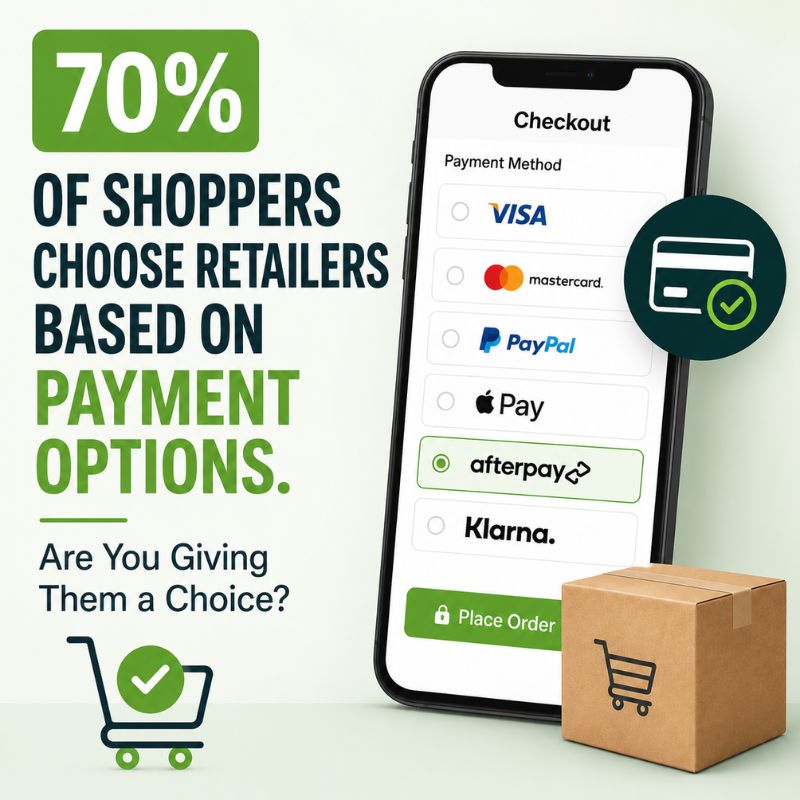
According to new research from PYMNTS Intelligence, 70% of consumers choose where they shop based on available payment options. That’s a reminder that the buying experience doesn’t begin when a package arrives at the customer’s door. It begins the moment someone decides whether your checkout process feels easy enough to complete.
For eCommerce merchants, this isn’t just a conversation about payment methods. It’s a conversation about customer expectations.
Checkout Is No Longer Just the Last Step
Not long ago, online checkout was fairly straightforward. Customers entered their shipping information, typed in a credit card number, and completed their purchase. If the transaction went through, everyone was happy. Today’s shoppers expect a much different experience.
Digital wallets, express checkout, Buy Now, Pay Later services, and one-click payment options have become part of everyday eCommerce. Customers don’t think of these features as conveniences anymore. Increasingly, they see them as standard.
That shift matters because shoppers compare every online buying experience to the easiest one they’ve ever had. If your checkout requires more effort than the next retailer’s, you’ve introduced friction at the exact moment you’re trying to close the sale.
Buy Now, Pay Later Is Becoming a Bigger Part of Checkout
It’s not just credit cards anymore. Buy Now, Pay Later (BNPL) services like Afterpay, Klarna, and Affirm have become increasingly common across eCommerce, especially for apparel, beauty, electronics, and other higher-ticket purchases.
For shoppers, these options offer more flexibility by allowing purchases to be split into smaller payments. For merchants, they can help reduce hesitation at checkout and may even increase average order values.
That doesn’t mean every store needs to offer every payment option available. The right mix depends on your customers, your products, and how people prefer to shop. The bigger takeaway is that customer expectations continue to evolve. The retailers that pay attention to those preferences are often the ones that make checkout feel effortless.
Choice Builds Confidence
Offering more payment methods isn’t about checking a box or following the latest eCommerce trend. It’s about giving customers the confidence to complete their purchase using a payment option they already know and trust.
Think about your own online shopping habits. Maybe you reach for Apple Pay because it’s quick. Maybe you prefer PayPal because you don’t like entering your card information. Or maybe Buy Now, Pay Later makes a larger purchase fit your budget more comfortably. Your customers have those same preferences.
When shoppers don’t see the payment option they’re expecting, some will look for another retailer that offers it. The product may be the same, but the buying experience feels easier somewhere else.
Small Frustrations Can Cost Big Sales
Checkout friction isn’t always obvious. Sometimes it’s asking customers to create an account before they can buy. Sometimes it’s a lengthy checkout form on a mobile device. Other times, it’s something as simple as not offering a preferred payment method. None of these obstacles seem particularly significant on their own. Together, though, they can create just enough hesitation for a customer to abandon their cart.
That’s why the checkout experience deserves the same attention as your homepage, product pages, and marketing campaigns. Every step between “Add to Cart” and “Place Order” should feel as effortless as possible.
What Merchants Should Take Away
The good news is that improving checkout doesn’t always require a major redesign. Start by looking at your store the way a first-time customer would. Is checkout simple on a mobile phone? Are the payment methods your customers expect easy to find? Does the process move quickly, or are there unnecessary steps that create friction?
It’s also worth reviewing your analytics. A high cart abandonment rate doesn’t automatically point to payment options, but it can be a signal that something in the checkout experience deserves a closer look.
Small improvements at checkout can have a meaningful impact because they’re happening at the point where customers are already ready to buy.
The Bigger eCommerce Trend
Today’s shoppers expect retailers to adapt to the way they want to shop, not the other way around. That expectation starts with checkout, but it doesn’t end there.
Once an order is placed, customers expect accurate inventory, timely shipping updates, and deliveries that arrive when promised. The entire post-purchase experience has become just as important as the purchase itself.
That’s why the most successful eCommerce businesses aren’t just investing in better marketing. They’re investing in better operations that support the promises they make at checkout.
Key Takeaways
- New research found that 70% of consumers consider payment options when deciding where to shop.
- Checkout has become a critical part of the customer experience.
- Small improvements that reduce friction can help increase conversions.
- The customer experience continues long after checkout, making reliable fulfillment just as important as a smooth buying process.
Frequently Asked Questions
Why are payment options important in eCommerce?
Payment options give customers flexibility and confidence during checkout. Offering familiar payment methods can make it easier for shoppers to complete their purchases.
What payment methods should eCommerce stores offer?
That depends on your customers, but many shoppers expect options such as major credit cards, Apple Pay, Google Pay, PayPal, and Buy Now, Pay Later services.
What is checkout friction?
Checkout friction refers to anything that makes completing a purchase more difficult, including unnecessary forms, limited payment options, or a complicated checkout process.
How does checkout affect customer loyalty?
A smooth checkout creates a positive first impression, while accurate fulfillment and reliable shipping help turn first-time buyers into repeat customers.
The Bottom Line
Research reinforces something many eCommerce merchants have suspected for years: eCommerce payment options are no longer just a checkout feature. They’re part of the customer experience.
Offering the payment methods your customers expect is one way to remove friction and build trust before an order is placed. Delivering on that promise with accurate inventory, efficient fulfillment, and reliable shipping is what keeps customers coming back.
If you’re looking for ways to create a smoother experience after checkout, talk to an Ordoro expert. We’ll show you how merchants use Ordoro to simplify inventory management, shipping, and order fulfillment so every order starts and ends on the right foot.