Holiday shopping has always been a bit of a popularity contest. Big brands have name recognition, big ad budgets, and plenty of ways to make sure shoppers see them. Smaller brands usually have to work a little harder to get invited to the party.
This holiday season, that equation may be changing. Shopify recently released new holiday shopping data showing that 65% of shoppers plan to use AI for at least one shopping task this season. But the number that really caught our attention was this one: among regular AI users, 71% say they’re more likely to choose an independent brand this year than they were last year.
That’s potentially very good news for smaller merchants, especially those selling products that are specialized, unusual, or made for a very specific customer.
Being Niche Might Actually Help
Think about the way most of us have traditionally searched for products online. You type something like “waterproof backpack” into a search bar and suddenly you’re staring at hundreds of waterproof backpacks, a bunch of sponsored listings, and at least three products that somehow aren’t backpacks at all.
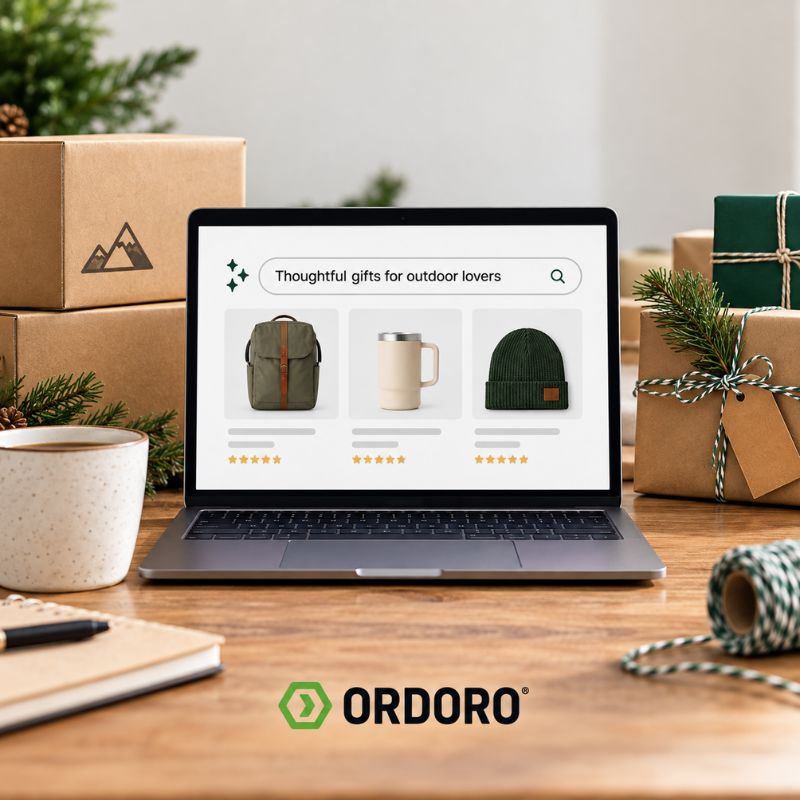
Shopping assistants can approach that search differently. Instead of knowing the right keywords, a shopper can describe exactly what they’re trying to find: I need a waterproof backpack under $100 that fits under an airplane seat, has a laptop compartment, and can arrive before Friday.
That changes the game a little. The biggest or most recognizable brand isn’t necessarily the best answer anymore. The product that most closely matches what the shopper actually wants has a chance to surface, too.
Shopify’s holiday research suggests that could be particularly useful for independent brands. It found that 81% of shoppers who regularly use AI say they’re choosing more products because those products feel personal, intentional, or considered. Shopify also highlighted merchants already seeing increases in AI-referred sales, including Cottonique, a hypoallergenic apparel company that reported a 276% year-over-year increase.
For niche brands, there’s an interesting lesson buried in those numbers. You probably aren’t going to beat a retail giant by having more products. You might beat them by having exactly the right product for exactly the right person.
Give Shoppers More Than a Product Name
Of course, there’s a catch. A shopping assistant can’t understand what’s special about your product if you never tell it. This is where smaller merchants can actually do something with all this news. Take another look at your product pages and think beyond the basic description. Who is this product really for? What problem does it solve? What makes it different from the dozens of similar products a shopper could choose instead?
Maybe your backpack fits under most airline seats. Or your clothing were designed specifically for sensitive skin. Maybe your replacement part works with an obscure model that hasn’t been manufactured since 2018. Maybe your dog toy is designed for the kind of dog that hears “indestructible” and takes it personally.
Those details have always been useful to customers. Now they may also help shopping tools understand when your product is a particularly good match.
That doesn’t mean stuffing product descriptions with every possible phrase someone might type into a chatbot. Please don’t make us regret bringing this up. It means being specific. Use clear product titles and descriptions. Fill out relevant attributes and variants. Answer the questions customers actually ask. Include useful details about materials, compatibility, sizing, use cases, and what makes the product different.
If you’re selling across several marketplaces or storefronts, it’s also worth looking at how your products appear on each one. Ordoro supports merchants selling across Shopify, Amazon, Walmart, eBay, Etsy, and other sales channels, and every one of those channels gives shoppers another way to encounter your brand.
The goal isn’t to suddenly write for robots. It’s to make your products easier for anyone to understand.
The Human Still Gets a Vote
Before we declare shopping assistants the new mall Santas, there’s another number in Shopify’s research worth paying attention to. Only about one-third of shoppers say they trust AI to actually make purchases for them.
That’s an important distinction. People may be increasingly comfortable asking for recommendations, comparing products, researching gifts, or narrowing down their options. They’re considerably less comfortable saying, “Here’s my credit card. You know what to do.”
So your storefront isn’t suddenly irrelevant. Your photography still matters. Reviews matter. Your brand story matters. The experience someone has after discovering your product matters.
In fact, that could make branding even more important for smaller merchants. A shopping assistant may be able to introduce someone to a company they’ve never heard of, but once that shopper lands on the product page, the merchant still has to earn the sale.
The assistant can make the introduction. Your brand still has to make a good first impression.
That combination could be especially powerful for smaller businesses. They don’t necessarily need millions of shoppers to recognize their name. They need the right shopper to discover the right product at the right moment.
What Should Smaller Brands Do This Holiday Season?
Probably not throw out the holiday marketing plan and start writing every product description for a robot.
Instead, use this as an opportunity to look at your store through the eyes of someone who has never heard of you. If shoppers are getting more specific about what they want, smaller brands should get more specific about what makes their products worth finding.
Here are five places to start:
- Get specific about what makes your products different
Don’t stop at describing what you’re selling. Explain who it’s for, what problem it solves, and why someone would choose it over a similar product. Whether it’s a particular material, unusual feature, or very specific use case, those details can help your products stand out when shoppers are looking for something beyond the basics. - Borrow a little language from your customers
Your customers might already be giving you better product descriptions than the ones on your website. Look through reviews, support questions, and social comments to see how people describe your products and what they love about them. If everyone keeps mentioning a benefit you barely talk about, that’s probably worth fixing. - Answer the questions shoppers ask before buying
Think about the things customers need to know before they’re comfortable clicking Add to Cart. Does it fit? Is it compatible? How does it work? What makes it different? Adding helpful FAQs and clear product details can make those answers easier for shoppers and shopping assistants to find. Bonus points if it cuts down on repetitive customer service questions. - Give your brand personality some room to shine
Smaller brands often have something big retailers struggle to replicate: a real story, a distinct personality, and a close connection to their customers. Don’t hide that behind generic product copy. Show people why you started the business, what you care about, and what makes your products special. Getting discovered is one thing. Giving shoppers a reason to remember you is another. - Make sure your products tell the same story everywhere
If you’re selling across Shopify, Amazon, Walmart, eBay, Etsy, or other channels, take a look at how your products appear on each one. Important features, descriptions, and product details shouldn’t disappear just because a shopper finds you somewhere different. Consistency helps customers recognize what makes your brand worth choosing, no matter where the introduction happens.
None of these tips requires a massive marketing budget or a complete website makeover. They’re about making the things that already make your business special easier for people to discover and understand.
Shopify’s numbers don’t mean the playing field has suddenly become perfectly level. Big brands still have big budgets, broad distribution, and plenty of name recognition. But if product discovery becomes less about who a shopper already knows and more about who has the best answer to what they’re looking for, niche merchants may have a little more room to compete.
We’ll take it.
Frequently Asked Questions About Holiday Shopping and Small Brands
Why could smaller brands benefit from changing holiday shopping habits?
Shopping assistants can help people search using very specific needs instead of relying only on brand names or broad keywords. That could give niche and independent products more opportunities to appear when they’re a strong match for what a shopper wants.
What should small brands include in product descriptions?
Go beyond the basics. Include useful details about who the product is for, what problem it solves, materials, sizing, compatibility, use cases, and anything else that helps explain why someone would choose it over another option.
Do shoppers trust AI to make purchases for them?
Not completely. Shopify’s research suggests shoppers are much more comfortable using AI for discovery, research, and recommendations than allowing it to complete purchases on their behalf. For merchants, that means the website and product page still have an important job to do.
Do small brands need to redesign their websites for AI shopping?
Probably not. A better place to start is making existing product information clear, specific, and useful. The same details that help a shopping assistant understand a product also tend to help human shoppers make better decisions.
Small Brand, Big Opportunity
The most interesting part of Shopify’s holiday research isn’t that shoppers are using another new piece of technology. It’s what that technology could change about how products get discovered.
For smaller brands, being specific may finally be more of an advantage than a limitation. You don’t need to have the product everyone wants. You need to have the product one particular shopper wants and make it easy for them to understand why it’s the right one.
As shoppers discover brands in more places, Ordoro helps multichannel sellers manage the orders and shipping that come next, without turning every new sales channel into another tab to babysit.
See how Ordoro helps eCommerce sellers keep everything moving →
- Haven’t Checked Your Walmart Seller Account Lately? You Might Want To.
- eBay Sellers Got a Glimpse of Higher Ad Costs. Then Came the Explanation.
- Small Brands Could Have a Big Holiday Advantage
- Meta Muse Can Shop Like a Customer. Should Merchants Treat It Like One?
- Print Barcode Labels While Receiving Inventory in Ordoro