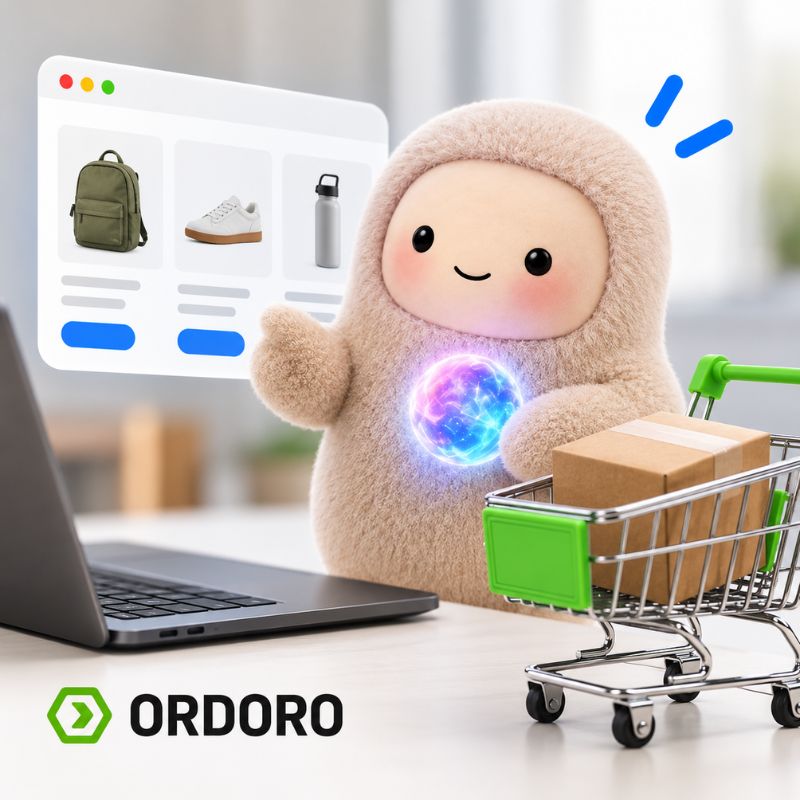
If you’ve suddenly started seeing Meta Muse everywhere, you’re not alone. Meta launched the personal AI agent in September, and it has quickly become one of the louder conversations in tech and eCommerce. At first glance, Muse can sound like another chapter in the agentic commerce story we’ve been hearing all year. AI finds products. AI compares products. Eventually, AI buys products. We know the drill. But Muse adds an interesting wrinkle: it has its own computer.
Meta built Muse to do more than answer questions. Give it a task, and it can use a dedicated virtual computer and browser to work on your behalf across the web. It can research, fill out forms, use connected services, book travel, shop, and handle multi-step tasks while you go do something more exciting. Meta says Muse asks for permission before sensitive actions such as sending an email or making a purchase.
For eCommerce merchants, that raises an interesting question. What happens when the next visitor to your store isn’t really a visitor at all?
What is Meta Muse?
Meta Muse is a personal AI agent designed to complete tasks for users instead of simply explaining how to complete them.
Muse runs inside what Meta calls the Muse Secure VM, a dedicated virtual computer in the cloud with its own browser. That gives the agent the ability to navigate websites and interact with online services much like a person sitting at a computer would.
A user might ask Muse to research a vacation, organize a dinner party, send an email or find something to buy. Muse can then work through the steps required to accomplish that task. That’s an important distinction.
A chatbot might tell you where to find a pair of running shoes. An agent can potentially go find the shoes, compare your options, navigate the website and help you buy them.
What makes Muse different from other AI shopping tools?
AI shopping agents aren’t new, and neither is agentic commerce. We’ve covered plenty of announcements about AI helping consumers discover products, compare prices and move through checkout. What’s notable about Muse is that shopping is only one part of a much broader personal agent.
Muse wasn’t built solely to work inside a retailer’s carefully constructed AI shopping experience. Its virtual computer and browser allow it to interact with the existing web and supported services while working toward whatever goal its user gives it. That potentially lowers the barrier for AI agents to interact with businesses.
A merchant doesn’t necessarily have to build a shiny new “Muse experience” before an AI agent can encounter its website. And that’s where things start getting both interesting and a little messy.
Your website was built for eyeballs. Muse doesn’t have any.
Imagine you sell auto parts. Figuring out that your store sells a brake kit is relatively easy. Figuring out whether that brake kit fits a particular vehicle is harder. Then an agent needs to know whether the correct version is actually in stock, what it costs today, whether the customer is eligible to buy it, how quickly it can ship and whether the inventory number it’s looking at is actually correct. Suddenly, that beautifully optimized product page isn’t the whole story.
AI agents need context and reliable data. Product attributes need to make sense. Inventory needs to be accurate. Pricing needs to be current. Shipping promises need to match reality.
This doesn’t mean your storefront suddenly doesn’t matter. Humans are still shopping, after all. But it does mean merchants may eventually have another audience to think about: software trying to understand the business on a customer’s behalf.
And your hero image can be absolutely gorgeous. Muse still isn’t going to compliment it. 😉
Why is Meta Muse controversial?
The same thing that makes Muse interesting also makes some people uncomfortable: it can act on your behalf. A useful personal agent needs context. It may need access to services, accounts and personal information to accomplish the tasks a user gives it.
Meta says users choose which apps Muse can connect to and what level of access it receives. Credentials are stored separately from the agent, Muse cannot see users’ passwords or payment information, sensitive actions require approval, and users can review an audit trail of what the agent has done. Meta also says conversations and data stored in Muse’s virtual machine aren’t shared with its advertising systems.
But consumers aren’t the only ones deciding how comfortable they are with all this. Merchants and platforms have to decide whether they want AI agents walking through the door, too.
And Amazon has already made its decision about Muse.
Amazon blocked Muse from shopping its site
Shortly after Muse launched, Amazon blocked the agent from shopping on Amazon.com. Amazon said Meta had not contacted the company before Muse began accessing its store and argued that agents should identify themselves and respect a service provider’s decision about whether to participate. Amazon also raised privacy and security concerns around third-party agents accessing its site.
People attempting to shop Amazon through Muse began receiving a message saying the unauthorized AI agent violated Amazon’s conditions of use. That’s more than a squabble between two giant tech companies. It points to a question eCommerce may have to sort out:
If an AI agent is acting for a customer, should a merchant treat that agent like the customer?
There isn’t a universal answer yet.
Some retailers and platforms are embracing AI shopping agents. Others are limiting their access because of concerns around privacy, fraud, customer trust, data and control over the shopping experience.
Welcome to the next fun eCommerce debate. We were clearly running low on those.
Shopify is taking a very different approach
While Amazon has been putting up a “no agents allowed” sign, Shopify is leaning into the opportunity.
Shopify products are part of the commerce ecosystem Meta is building around Muse, and Shop Pay is helping support purchases made through AI-driven shopping experiences. Early users are already reporting that Muse can lead them toward products sold directly by brands using Shopify rather than marketplaces such as Amazon.
Shopify is also showing up on the merchant side of Muse. On September 29, Meta announced Muse for Small Business, which allows businesses to connect services they already use, including Shopify, Klaviyo, QuickBooks, Stripe, Canva, Slack, Facebook and Instagram. A business owner can give Muse a goal and allow the agent to work across those connected tools, with Meta saying nothing publishes, sends or spends without the owner’s approval.
That’s a particularly interesting development for eCommerce. Muse could potentially sit on both sides of a transaction. A consumer might use an agent to shop, while a merchant uses an agent to help operate the business serving that shopper.
Is Muse good or bad for eCommerce merchants?
It’s probably too early for either label. The opportunity is easy to see. AI agents could become another discovery channel for merchants, especially smaller brands that don’t have the advertising budgets or name recognition of their larger competitors.
A shopper could tell Muse, “Find me a waterproof backpack under $100 that can arrive by Friday,” and potentially discover a merchant they’d never heard of before. That’s good news if you’re the merchant with the right backpack.
The tradeoff is control.
If an AI agent searches, compares products and handles more of the purchasing journey, the shopper may spend less time browsing the merchant’s actual store. Attribution could become more complicated. Merchandising could have less influence. And another platform could sit between the merchant and customer.
Retailers are already divided over whether that tradeoff is worth it.
What should eCommerce merchants do about Muse right now?
Probably not build your entire 2027 strategy around a cartoon AI character. The more useful takeaway is simpler: make your business easier for machines to understand. That doesn’t necessarily mean adding more AI to your business. It means getting the information underneath your eCommerce operation right.
Product data should be clear and structured. Attributes should be accurate. Prices should be current. Inventory should reflect what’s actually available. Shipping information should be reliable. And if several systems contain different answers to the same question, figuring out which one is the source of truth becomes increasingly important.
Those things already matter when you’re selling across Amazon, Shopify, Walmart, eBay, Etsy and your own website. AI agents simply give merchants another reason to get them right.
And that’s where this story starts sounding surprisingly familiar to us at Ordoro.
The interface may change. The shopper might be a person, an AI agent acting for a person, or some combination of both. But eventually somebody orders the thing, inventory has to be updated, and a package has to leave the building.
Some parts of eCommerce remain delightfully un-futuristic.
Meta Muse FAQs
What is Meta Muse?
Meta Muse is a personal AI agent that can answer questions and perform tasks on a user’s behalf. It operates using a dedicated virtual computer and browser and can interact with supported websites, apps and services.
How is Meta Muse different from a chatbot?
A chatbot primarily provides information or generates content. Muse is designed to take actions toward a user’s goal, such as navigating websites, using connected services, completing forms and helping make purchases.
Can Meta Muse shop online?
Yes. Muse can help users research and purchase products online, although individual websites can restrict or block its access. Amazon, for example, has blocked Muse from shopping on Amazon.com.
Why did Amazon block Meta Muse?
Amazon said Muse was accessing its retail site without authorization and argued that AI agents should identify themselves and respect whether service providers choose to participate. Amazon also cited privacy and security concerns.
Does Meta Muse work with Shopify?
Yes. Shopify is participating in Meta’s commerce efforts around Muse, and Shopify is also one of the services businesses can connect to Muse for Small Business.
What is Muse for Small Business?
Muse for Small Business lets businesses connect tools such as Shopify, QuickBooks, Klaviyo, Stripe, Slack, Canva, Facebook and Instagram. Muse can then work across those services toward business goals, while requiring approval before publishing, sending or spending.
Should eCommerce sellers prepare their stores for AI agents?
Sellers don’t need to overhaul their stores for Muse today. However, accurate inventory, structured product information, current pricing, clear shipping details and reliable data sources could become increasingly important as AI agents play a larger role in product discovery and purchasing.
Muse may not be the point
Muse is getting attention right now, but the bigger takeaway isn’t that every merchant needs a “Muse strategy.” Muse will change. Other agents will emerge. Some will disappear. Retailers will experiment with letting them in, keeping them out, or giving them limited access. What matters for merchants is what’s underneath all of them.
If your product information is clear, inventory is accurate and fulfillment systems know what’s actually available, your business is in a much better position for whatever shopping interface comes next.
At Ordoro, we’ve spent years helping eCommerce merchants keep exactly those moving pieces connected, from multichannel inventory to order management and shipping. AI may be changing who comes through the front door. The order still has to make it out the back.
See how Ordoro helps with shipping and order management