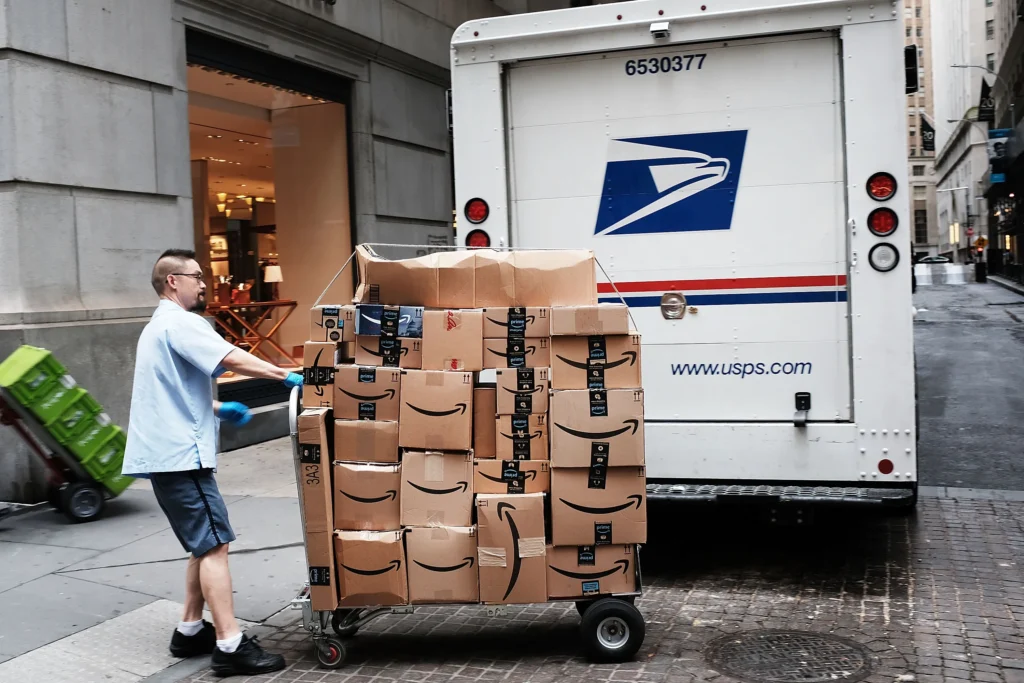
Amazon says it is not leaving the USPS. But even the hint of Amazon USPS shipping changes is enough to make the rest of the shipping world flinch.
For years, Amazon has leaned on USPS to help deliver everything from last-minute dog toys to panic-ordered charger cables. Now it delivers over seventy percent of its own packages and it is looking harder at what it wants from the last mile. The Washington Post says Amazon might end the relationship. Amazon says, “Not so fast.” The rest of us say, “Wait… what happens if they do?”
When Amazon Met USPS
Amazon and USPS have been shipping buddies for decades. Amazon brought the volume. USPS brought the reach. Together, they helped redefine how fast two-day delivery could actually feel.
But behind the scenes, Amazon has been building a logistics empire of its own. Warehouses, drivers, planes, trucks. These days, Amazon delivers more of its own packages than any other company. And USPS? It handles what is left. For now.
The Quiet Shift Already Happening
Even if Amazon does not officially “break up” with USPS, it does not have to. The shift is already happening.
Fewer packages are going through USPS. More are staying in Amazon’s own network. That means USPS is losing a massive chunk of business and they may need to make it up somewhere. Guess who might end up footing that bill?
Yep. Everyone else.
What This Could Mean for eCommerce Sellers
If USPS raises rates or reduces service to adjust, merchants could feel it fast:
- Lightweight and rural shipping might get more expensive
- Delivery windows could stretch out for non-Amazon packages
- Other carriers may absorb more volume, creating congestion and rate pressure
Even if you do not sell on Amazon, your costs and customer experience might still get caught in the splash zone.
What Amazon Wants
Amazon is not shy about what it wants. It wants more control, more speed, more flexibility. That is why it is investing in its own network and reevaluating partnerships.
According to Newsweek, Amazon says they are still working with USPS and have no plans to end that. But if the current contract expires or terms change, even slightly, it could send a ripple through the entire fulfillment landscape.
What You Can Do Now
No matter what Amazon decides, you still have a business to run. Here is how to future-proof your shipping setup:
- Use a platform that gives you multi-carrier flexibility
- Monitor rate changes from USPS, UPS, FedEx, and regionals
- Automate your shipping decisions based on real-time data
- Be ready to reroute volume fast if one carrier becomes too costly
Diversification is not a backup plan. It is a strategy.
This Isn’t Just Amazon’s Story
The real story here is not whether Amazon dumps USPS. It is what happens when one big player makes a move and how smaller businesses can stay nimble through it.
You do not need Amazon’s fleet to keep up. You just need the right tools, the right data, and the freedom to switch when the landscape shifts.
Frequently Asked Questions About the Amazon USPS Breakup
Is Amazon really leaving USPS?
Amazon says no, but contract negotiations and internal shifts suggest they are reassessing the relationship.
Why does it matter if Amazon pulls back?
USPS depends on Amazon’s volume. If that drops, rates or service for others may change to make up for it.
Will shipping costs go up?
Potentially. Especially for lightweight, residential, or rural deliveries that USPS handles best.
How can I protect my business from this?
Use a flexible shipping platform like Ordoro that supports multiple carriers and lets you adjust quickly.
Does this affect non-Amazon sellers?
Yes. USPS rate changes or delivery slowdowns would impact all businesses using the service.
Want to Stay Ahead of the Shipping Shifts?
If Amazon blinks, the whole fulfillment ecosystem wobbles. The key is building resilience before it hits.
Ordoro helps eCommerce sellers sync inventory, ship smart, and pivot fast no matter which carrier is in or out of favor.
Talk to our team or start your free trial today. Let’s build a fulfillment strategy that holds steady when everything else is in motion.